
 Business License
Blog Categories

Hardware Tools in Plant Maintenance and Repair Work
A shift lost four hours of production to one missing bearing puller. The plant had a full tool box and three hundred sockets, and none of them could draw a coupling off a shaft.
This article sets out the hardware tools plant maintenance crews actually carry, how repair tool application changes between rotating equipment and piping work, and what maintenance tool selection should be based on. A plant case closes the piece.
1. Hardware Tools Plant Maintenance Teams Actually Carry
Hardware tools plant maintenance crews carry fall into four working groups, and a kit that misses one group tends to borrow from another shift or stall part way through a job.
The first group covers fastening. Sockets, spanners, hex keys and a ratchet in the sizes the plant actually uses handle the majority of routine work on a line.
The second group covers torque control. A torque wrench, a set of adaptors and a record of the last check against a reference gauge belong together in the same case.
The third group covers disassembly. Pullers, punches, a soft faced mallet and a set of bearing splitters carry most rotating equipment work through a strip down.
The fourth group covers measurement. A feeler gauge, a dial indicator and a straight edge support the alignment and clearance checks that decide whether a rebuild holds.
Wintooltech groups hand tools this way when it packs a maintenance set, so a buyer can see the coverage at a glance rather than a list of loose items.
A fifth group is easy to leave out and hard to replace on a night shift: lighting and access. A lamp, a mirror on a stick and a small step stool reach a bolt that is visible but not touchable.
2. Repair Tool Application in Rotating Equipment Work
Repair tool application in rotating equipment work follows a sequence, and the tools change as a job moves from access through removal to measurement.
Access comes first. A hex key set and a socket on an extension reach the bolts that hold a bearing housing or a pump casing in place.
Then comes removal. A two or three leg puller draws a coupling or a bearing off a shaft without loading the shaft itself.
Measurement follows. A dial indicator on a magnetic base reads runout on a shaft, and that reading decides whether a part goes back into service.
Alignment closes the job. A straight edge and a set of feeler gauges give a first check before a more precise method is brought in.
A tool missing at any step stops the whole sequence, which is why Wentu packs a rotating equipment kit as a sequence rather than as a pile.
3. Maintenance Tool Selection: Matching Tool to Task
Maintenance tool selection starts from the task rather than from the brand, and the first question is what the tool has to hold against.
A bolt head decides the size and the drive. A 13 mm head takes a 13 mm socket on a 1/2 inch drive for most plant work.
A rusty or rounded fastener changes the answer. A six point socket grips a worn head better than a twelve point socket, which is why both belong in a kit.
Clearance decides the tool shape. A long pattern spanner reaches a bolt behind a pipe run where a short socket will not go at all.
Duty decides the material. An impact driver needs impact rated sockets rather than chrome ones, since a chrome socket can crack under repeated blows.
Yichun Wentu lists the drive size and the point count on each item, so a buyer can match a tool to a task without guessing at the joint.
Purchase quantity shapes the choice as well. A plant that uses one size of socket in bulk buys that size as a rail, while a plant with mixed equipment buys a full set and accepts the spare sizes.
4. Hardware Tools Plant Maintenance and Torque Work
Hardware tools plant maintenance work leans on torque more than most trades, because a flange bolt or a bearing cap has a figure attached to it.
Torque is measured at the fastener rather than at the wrench handle, and the reading drifts if a wrench is dropped or left at its setting.
A torque wrench should be returned to its lowest setting before it goes back in the case, which keeps the internal spring inside its working range.
Verification is a separate step. Checking the wrench against a reference gauge at intervals catches a drift before a joint is assembled to a wrong figure.
A flange takes a crossing pattern rather than a circle. Tightening opposite bolts in stages brings the joint down evenly and avoids a leak at one edge.
Wentu supplies a torque wrench with a stated range and a note on the verification interval, so a plant can plan the check rather than discover it late.
5. Repair Tool Application on Piping and Conveyors
Repair tool application changes shape on piping and conveyors, where the work is spread along a line rather than gathered at one machine.
Piping work needs a flange spanner, a set of sockets on long extensions and a wedge or spreader for a stiff joint.
A corroded flange can close a gap that a spanner will not open. A flange spreader applies its force along the joint rather than beside it.
Conveyor work needs a different set. A belt clamp, a set of rollers, a pry bar and a knife cover most belt and idler changes.
Access along a conveyor is often awkward. A ratchet with a flexible head or a low profile socket reaches the bolts under a frame.
A plant that runs both piping and conveyors keeps the two kits apart, since a tool carried to the wrong end of a line costs a walk rather than a minute.
A piping run that is insulated adds a step. A knife and a set of insulation ties belong with the flange tools rather than in a separate bag.
6. Maintenance Tool Selection: Ratchets, Hex Keys and Sockets
Maintenance tool selection among ratchets, hex keys and sockets is decided by three figures: the drive size, the reach and the point count.
The drive size sets the torque a tool will take. A 1/4 inch drive suits small fasteners, while a 1/2 inch or 3/4 inch drive suits plant hardware.
The reach sets the shape. A stubby ratchet fits a tight corner, and a long handle gives leverage on a bolt that has not moved in years.
The point count sets the grip. A twelve point socket is quicker to seat on a good head, and a six point socket holds a damaged one.
Hex keys follow the same logic. A long arm reaches a recessed screw, and a ball end lets a key enter at an angle where a straight key will not.
Wentu sells ratchets, sockets and hex keys as a set of the same drive, so a plant does not end up with three sizes of adaptor in one box.
Adaptors deserve a place in the box rather than on a wish list. A 1/2 inch to 3/8 inch adaptor and a 3/8 inch to 1/4 inch adaptor cover most of the crossovers a crew meets.
7. Hardware Tools Plant Maintenance: Storage and Accountability
Hardware tools plant maintenance depends on a tool being where the next crew expects it, and that is a storage problem before it is a tool problem.
A shadow board shows at a glance what is missing. An empty outline at the end of a shift is visible to a supervisor without a count.
A tool crib with a sign out sheet suits the items that travel. A torque wrench or a dial indicator that leaves the crib is signed to a job.
Consumables sit on a different line. Blades, gaskets, fasteners and sealant run out faster than tools and are reordered on a cycle.
A monthly check catches the slow losses. A socket set that has lost one size is still usable, so the gap is noticed late unless it is checked.
Yichun Wentu Imp&Exp Trade Department packs a maintenance set in a case with a printed layout, which turns a tool box into a checklist a crew can read in a few seconds.
8. A Plant Case: Hardware Tools Plant Maintenance in Practice
A food processing plant rebuilt its maintenance kit across two production lines after one shift lost four hours to a missing puller.
The first change was a shadow board at each line, so a gap was visible at the end of every shift. The second was a torque wrench per line with a verification date written on the case.
The third was a small piping kit held at the plant rather than borrowed from a contractor. A flange spreader was the item that had been missing most often.
Downtime from a missing tool fell from a few hours a month to well under an hour across the following quarter, measured from the maintenance log.
The plant later added a second dial indicator, since two crews often aligned two machines on the same evening shift.
The plant also wrote a one page kit list per line, so a new technician could pick up a shift without a walk round the store first.
9. Frequently Asked Questions on Hardware Tools Plant Maintenance
9.1 What tools does hardware tools plant maintenance work need?
Hardware tools plant maintenance work needs four groups of tools rather than one. Fastening covers sockets, spanners, hex keys and a ratchet in the sizes the plant uses. Torque control covers a torque wrench, a set of adaptors and a record of the last check against a reference gauge. Disassembly covers pullers, punches, a soft faced mallet and bearing splitters, which carry most rotating equipment work through a strip down, while measurement covers a feeler gauge, a dial indicator and a straight edge for the alignment and clearance checks that decide whether a rebuild holds.
9.2 How does repair tool application differ on rotating equipment?
Repair tool application on rotating equipment follows a sequence rather than a single tool change. Access comes first, with a hex key set and a socket on an extension reaching the bolts that hold a bearing housing or a pump casing. Removal follows, where a two or three leg puller draws a coupling or a bearing off a shaft without loading the shaft. Measurement comes next, since a dial indicator reads runout and that reading decides whether a part goes back into service, and alignment then closes the job, since a tool missing at any step stops the whole sequence.
9.3 What drives maintenance tool selection for a bolt?
Maintenance tool selection for a bolt turns on four figures: the head size, the drive size, the reach and the point count. A 13 mm head takes a 13 mm socket on a 1/2 inch drive for most plant work. Reach decides the shape, since a long pattern spanner goes behind a pipe run where a short socket will not fit, and point count decides the grip because a six point socket holds a rounded head better than a twelve point one. Duty then decides the material, since impact work needs impact rated sockets rather than chrome ones.
9.4 How should a plant store and account for its tools?
A plant should store tools so that a missing item is visible rather than counted. A shadow board shows at a glance what is gone, because an empty outline at the end of a shift is seen by a supervisor without a count. A tool crib with a sign out sheet suits the items that travel, and a torque wrench or a dial indicator that leaves the crib is signed to a job. A monthly check catches slow losses, since a socket set that has lost one size is still usable and the gap is noticed late.
Recently Posted
-
Factory Testing Before Shipping Torches and Power Tools
October 20, 2026A buyer once received a batch of 600 torches in which 14 units would not hold pressure at the valve stem, a fault that appeared w Read More
-
Payment and Incoterms for Tool and Drone Power Orders
October 20, 2026A first order of cordless tools and a tethered power station is usually settled on three pages, one for the goods, one for the pr Read More
-
Writing an RFQ for Hardware Tools and Gas Torches
October 19, 2026An importer sent the same enquiry to three suppliers and received three quotes that could not be compared. One priced a torch hea Read More
-
What Is Hardware in the Tool Trade? A Practical Definition
October 19, 2026A purchasing manager once asked a supplier for all the hardware on a tool order and received three cartons of screws with no dril Read More

Contact Us
Recommended Products
-
 MAPP Hose Torch for Copper Brazing & Soldering Work, WH‑DSVAP Patented Switchable Dual‑Tip, Needle‑Valve Control, Aluminum‑BodyTorchNegotiableMOQ: 100 Pieces
-
MAPP Hose Torch for HVAC Brazing Soldering, WH‑DSVAP Patented Switchable Dual‑Tip Needle‑Valve, Aluminum‑Body Propane Gas TorchNegotiableMOQ: 100 Pieces
-
MAPP/Propane Torch for Gas Soldering Brazing, WT‑ST Heavy‑Duty Model, Adjustable‑Flame, Heavy‑Duty Brass Valve TorchNegotiableMOQ: 100 Pieces
-
MAPP Gas Torch for Heat‑Concentrating Brazing Work, WT‑SSP Patented Model, Self‑Igniting, Stainless Steel Tip TorchNegotiableMOQ: 100 Pieces
-
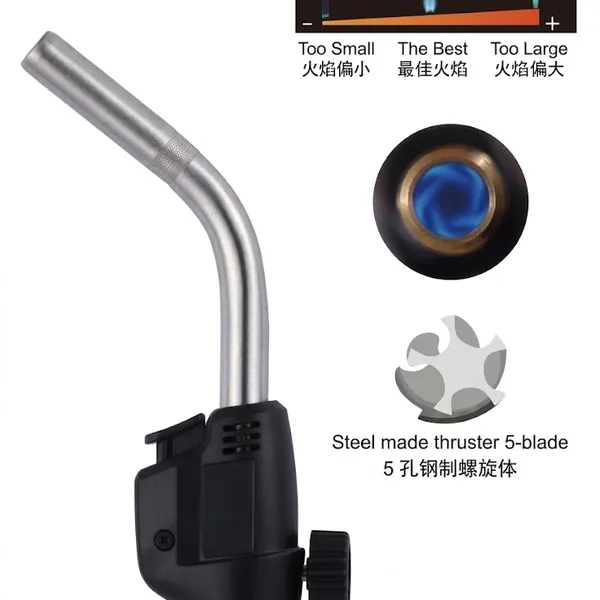
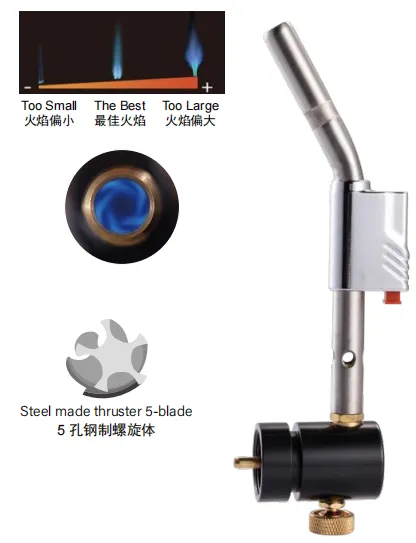
MAPP Torch for Heavy‑Duty Brazing Soldering, WT‑SSA‑1 Model, Self‑Igniting, Aluminum Housing 360° Swivel TorchNegotiableMOQ: 100 Pieces
-
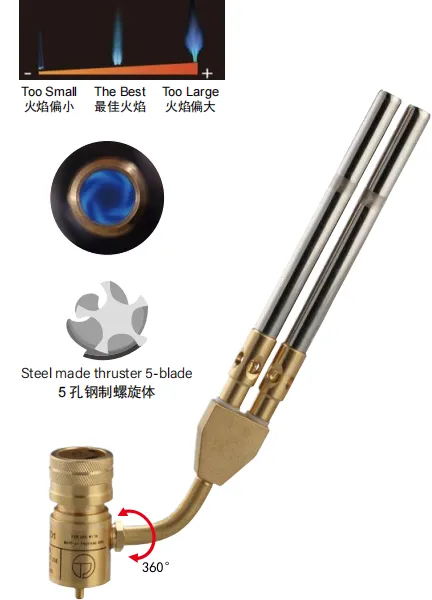
MAPP Gas Torch for Copper Pipe Brazing Work, WT‑D1 Model, 360° Swivel Dual‑Tip, High‑Heat Twin Flame TorchNegotiableMOQ: 100 Pieces
-
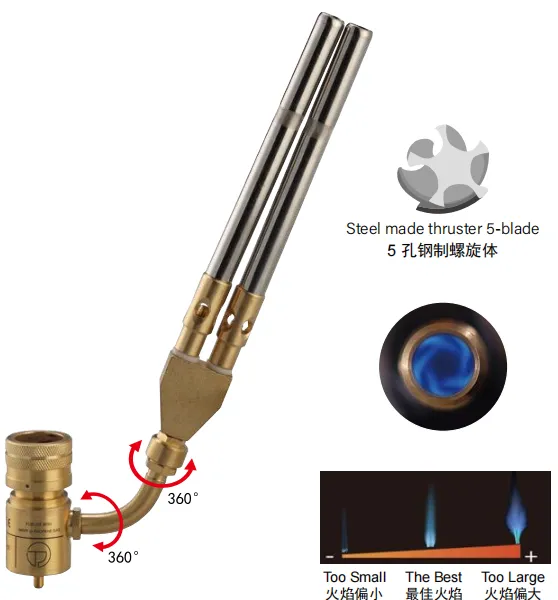
MAPP Gas Torch for High‑Efficiency Brazing Processing, WT‑D2 Model, 360° Two‑Way Swivel Dual‑Tip, Twin Flame TorchNegotiableMOQ: 100 Pieces
-
MAPP Torch for Twin‑Flame Brazing Work, WT‑D2SA Model, Self‑Igniting Dual‑Tip 360° Two‑Way Swivel, Aluminum Igniter TorchNegotiableMOQ: 100 Pieces
-
MAPP Torch for Brazing Application, WT‑D2P Patented Model, 360° Two‑Way Swivel Switchable Single/Dual Tip, High‑efficiency TorchNegotiableMOQ: 100 Pieces
-
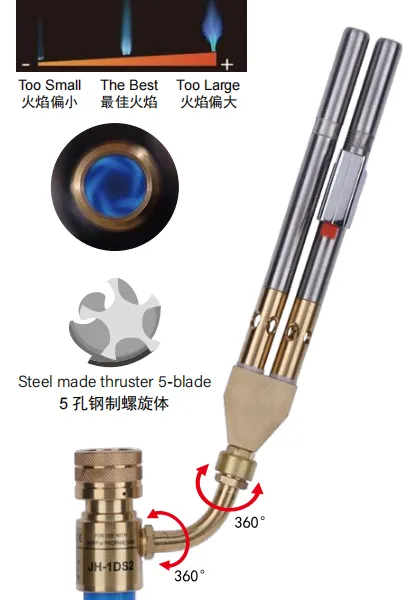
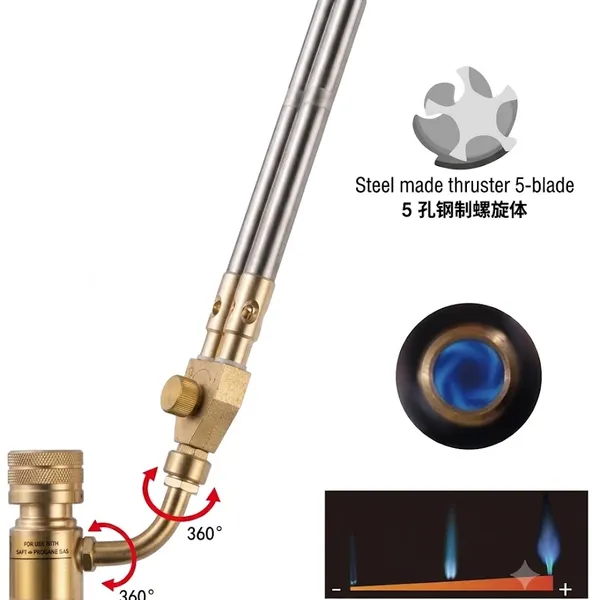
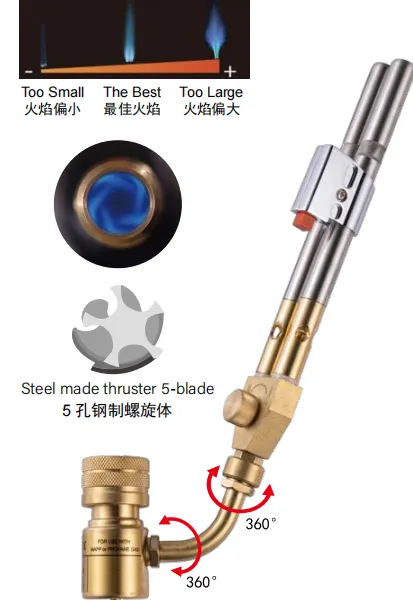
MAPP Torch for Brazing Soldering, WT‑D2AP Patented Model, Switchable Dual‑Tip Self‑Igniting, Aluminum Housing TorchNegotiableMOQ: 100 Pieces
-
MAPP Gas Torch for Welding Brazing Work, WT‑D1A Model, 360° Swivel Self‑Igniting Dual‑Tip, Twin Burner Pipe TorchNegotiableMOQ: 100 Pieces
-
MAPP Torch for Twin‑Flame Brazing Soldering, WT‑D1SA Premium Model, Self‑Igniting Dual‑Tip, Aluminum Igniter TorchNegotiableMOQ: 100 Pieces
-
MAPP Gas Torch for Three‑Flame Brazing Processing, WT‑T Model, 360° Swivel Triple‑Tip, Ultra High‑Output TorchNegotiableMOQ: 100 Pieces
-
MAPP Gas Torch for High‑Heat Brazing Work, WT‑TSA Model, Self‑Igniting Triple‑Tip, Aluminum Housing TorchNegotiableMOQ: 100 Pieces
-
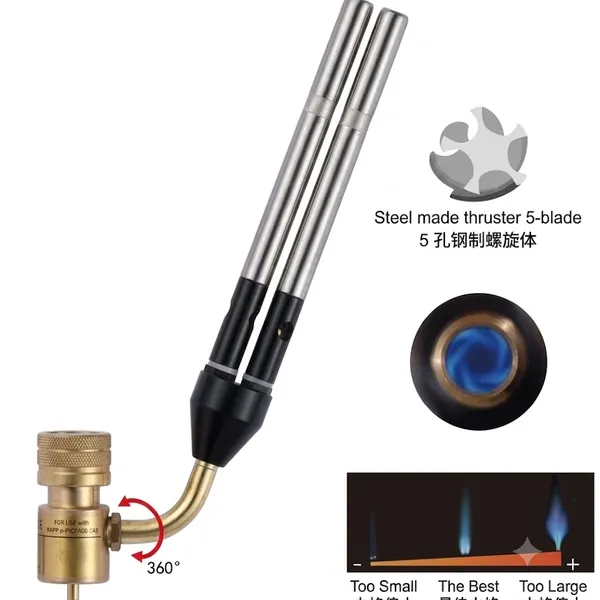
MAPP Gas Hose Torch for Flexible Soldering Brazing, WH‑SS Model, Self‑Igniting, Flexible High‑Pressure Extension TorchNegotiableMOQ: 100 Pieces
-
MAPP Hose Torch for Extension Brazing Soldering, WH‑SST Model, Self‑Igniting, Fast‑Cooling Brass Tip TorchNegotiableMOQ: 100 Pieces
-
MAPP Extension Torch for Brazing Work, WH‑SSV Model, Needle‑Valve Flame Adjustment Self‑Igniting, High‑performance Extension TorchNegotiableMOQ: 100 Pieces
-
MAPP Hose Torch for Brazing Soldering, WH‑SSVT Deluxe Model, 6‑Blade Thruster Structure Needle‑Valve, Thick Brass Tip TorchNegotiableMOQ: 100 Pieces
-
MAPP Hose Torch for Heavy‑Duty Brazing Work, WH‑SSVTP Patented One‑Piece Model, One‑Hand Needle‑Valve, Thick Brass Tip TorchNegotiableMOQ: 100 Pieces
-
MAPP Hose Torch for Soldering Brazing, WH‑DSVA Model, Needle‑Valve Dual‑Tip Self‑Igniting, Aluminum Igniter TorchNegotiableMOQ: 100 Pieces