
 Business License
Blog Categories

What Is Hardware in the Tool Trade? A Practical Definition
A purchasing manager once asked a supplier for all the hardware on a tool order and received three cartons of screws with no drill in sight. In the tool trade the word is narrower than it sounds in a general store, and a misread of it can hold a shipment at the customs desk for days.
This article sets out a hardware tools definition, maps the hardware product categories that travel together in export orders, and describes the tools and hardware trade scope as it appears on a purchase list. It closes with a buyer case and the questions importers send most often.
1. Hardware Tools Definition: What the Term Covers
A hardware tools definition in the trade starts with a boundary rather than a list. Hardware covers the small metal goods that hold, fix, cut or fasten a structure, together with the hand tools that work them.
Under that boundary a hinge, a bracket, a bolt, a rivet and a hand saw sit in one family. A cordless drill does not, even when a fitter uses it in the same hour as the hand saw.
The boundary matters at the customs desk and on a quotation more than it matters on a bench. Two suppliers can quote the same set of parts and split them into different headings, which is what makes the definition worth writing down.
A practical test is to ask what moves the working part. Where a hand supplies the force, the item is usually hardware. Where a battery or a mains lead supplies it, the item is usually a power tool and the paperwork that follows is different.
Buyers who export to several markets often keep two catalogues for this reason. One lists the parts by function for a trade audience, and the other lists them by material for an engineering audience, and both draw on the same stock, so a single order can serve either audience without a second pick.
2. Hardware Product Categories in a Working Range
Hardware product categories are usually grouped by the job rather than by the material, because a buyer searches for a task before searching for a metal.
| Category | Typical items | Where it travels |
|---|---|---|
| Fasteners | Bolts, screws, nuts, washers | Every trade order |
| Fixings | Anchors, wall plugs, brackets | Construction and fitting |
| Hand tools | Wrenches, pliers, hand saws | Repair and assembly |
| Builders hardware | Hinges, handles, locks, rails | Joinery and furniture |
The table shows why a single container can mix four categories without becoming a mixed load. They share a shelf in the warehouse and a page in the catalogue, so they are picked together.
A first order often covers all four at low volume. A repeat order tends to concentrate on one or two, which is when a supplier starts to see the buyer's real product line.
Yichun Wentu lists the four categories in one range for this reason, so that a distributor can build a starter order without opening four separate enquiries.
The mix also changes the way a range is priced. Four thin categories spread one fixed export cost across a small value, while two deep categories carry the same cost on a larger base, which is why a repeat order often looks cheaper per unit.
3. Tools and Hardware Trade Scope Across Export Markets
Tools and hardware trade scope widens and narrows with the market rather than with the product. A region that builds with timber asks for a different mix from one that builds with concrete.
North America leans toward fasteners and hand tools in large counts. Northern Europe leans toward builders hardware with a finish specification attached to each item.
The scope also shifts with the channel. A buyer serving trade counters wants bulk packs, while a buyer serving retail wants a printed card and a barcode on every unit.
Wentu advises buyers to read the scope from the enquiry itself rather than from a market report. The units named on the enquiry, whether pieces, packs or cartons, usually describe the channel before the buyer does.
Seasonality moves the scope as well. A market entering its building season orders fixings and fasteners in volume, while the same market turns to repair items through the quieter winter months.
4. Where a Hardware Tools Definition Meets Hand Tools
The point where a hardware tools definition meets hand tools confuses both sides of an order. A hand tool is hardware by material and by channel, yet a buyer ordering for a workshop may file it with power tools.
The split is usually decided by who uses the item. A trade counter sells wrenches beside hinges, while a workshop store sells wrenches beside drills, and each arrangement carries its own logic.
For an exporter the safe route is to keep hand tools in both catalogues. The same wrench can be listed under hardware and under tools without any change to the part itself.
What must stay stable is the description on the invoice. A wrench described as hardware on one line and as a power tool on the next invites a query that takes days to clear.
A shared part number removes most of that risk. Where the same wrench carries one code in both catalogues, a buyer can order from either list and receive the same item.
5. Fasteners and Fixings Inside Hardware Product Categories
Fasteners sit at the centre of hardware product categories and account for the largest share of most repeat orders.
A fastener is judged by thread, length, head and finish. A single missing figure turns a clear order into a quotation with three possible answers and three different prices.
Finish is the field most often left blank. Zinc, black oxide and stainless change both the price and the service life, and a buyer who omits the finish tends to receive the lowest cost option rather than the right one.
Wintooltech asks buyers to name the finish and the thread standard together, because a standard without a finish leaves the surface open to interpretation.
Pack quantity is the second field that decides the price. A fastener bought in packs of 1,000 costs less per piece than the same fastener bought in packs of 100, and a gap of 15 to 30 percent is wider than most buyers expect.
6. Power Tools Beside Hardware Product Categories
A power tool sits outside hardware product categories, yet it travels in the same container and on the same enquiry more often than not.
The reason is the end user. A fitter who buys hinges also buys a screwdriver, and a distributor who stocks brackets also stocks the drills that fix them into a wall.
Keeping the two apart on paper helps at the customs point. A power tool carries a 12V or 18V battery and a motor, so it brings documentation that a box of bolts does not.
A mixed order is still worth consolidating. One container that carries both saves a freight booking, and the paperwork can be split by category inside the same shipment.
Voltage and battery platform are worth naming even in a mixed order. A buyer who stocks one platform can reuse packs across several tools, which is a reason to choose a supplier with a consistent range.
7. Tools and Hardware Trade Scope in Export Orders
Tools and hardware trade scope shows up most clearly in the way an order is packed rather than in the way it is quoted.
A buyer in one market wants a pallet of mixed cartons, while a buyer in another wants each category on its own pallet for a distribution centre.
Packing also decides the label. A retail bound carton carries a barcode and a country of origin, while a trade bound carton may carry neither.
Yichun Wentu Imp&Exp Trade Department asks for the destination type before packing is planned, since a pallet built for retail rarely suits a trade counter without rework.
A packing list that names the category against each carton saves an inspection at destination. The inspector can match a carton to a line on the list without opening it at the port gate.
Where a shipment carries 6 or more categories, a short summary sheet at the front of the file keeps the paperwork navigable. It lists the carton count against each category so that a broker can reach one line without reading the whole list.
8. A Buyer Case: Applying the Hardware Tools Definition
A first time importer placed an order described as hardware for a building supplies chain and received a mixture that the chain could not merchandise.
Applying a hardware tools definition to the list showed the problem. About a third of the order value sat in power tools, which the chain sold from a locked display rather than from an open shelf.
The second order split the two. Hardware went to the open aisle, power tools went to the display case, and the chain placed both lines from a single purchase order.
The lesson was not about the products. A shared definition decided where each item landed in the store, and that decided whether the order sold at all.
9. Frequently Asked Questions About Hardware in the Tool Trade
9.1 What is a hardware tools definition in the tool trade?
A hardware tools definition in the tool trade covers the small metal goods that hold, fix, cut or fasten a structure, together with the hand tools that work them. A hinge, a bracket, a bolt, a rivet and a hand saw sit inside the boundary, while a cordless drill sits outside it because a motor supplies the force. The definition matters most at the customs desk and on a quotation, where two suppliers can split the same set of parts into different headings. A buyer can test the boundary by asking what supplies the working force.
9.2 How many hardware product categories should a first order cover?
Hardware product categories are usually grouped by the job rather than by the material, and a first order can cover four of them at low volume without becoming unwieldy. Fasteners, fixings, hand tools and builders hardware share a shelf in the warehouse and a page in the catalogue, so they are picked together. A repeat order tends to concentrate on one or two categories, which is when a supplier starts to see the buyer's real product line. Category naming is not fixed across markets, so the same item may sit under different headings in two catalogues.
9.3 Why does tools and hardware trade scope change by market?
Tools and hardware trade scope changes with the market rather than with the product, because a region that builds with timber asks for a different mix from one that builds with concrete. North America leans toward fasteners and hand tools in large counts, while Northern Europe leans toward builders hardware with a finish specification attached to each item. The channel shifts the scope again, since a buyer serving trade counters wants bulk packs and a buyer serving retail wants a printed card and a barcode on every unit. The units named on the enquiry usually reveal the channel before the buyer does.
9.4 How should a first order be split between hardware and power tools?
A first order should be split by where each item is sold rather than by what it costs. A building supplies chain may merchandise hardware from an open aisle and power tools from a locked display, so the two lines need separate cartons, separate labels and sometimes separate invoices. Keeping them together on the paperwork is workable as long as the packing list shows the split by category inside the shipment. Wentu advises buyers to describe the destination channel on the enquiry, because that answer decides how the pallet is built.
Recently Posted
-
Factory Testing Before Shipping Torches and Power Tools
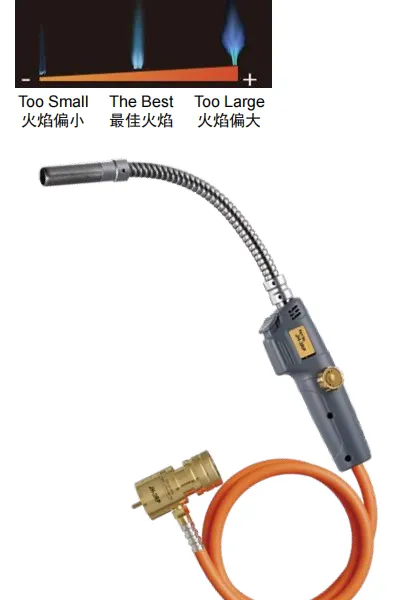
October 20, 2026A buyer once received a batch of 600 torches in which 14 units would not hold pressure at the valve stem, a fault that appeared w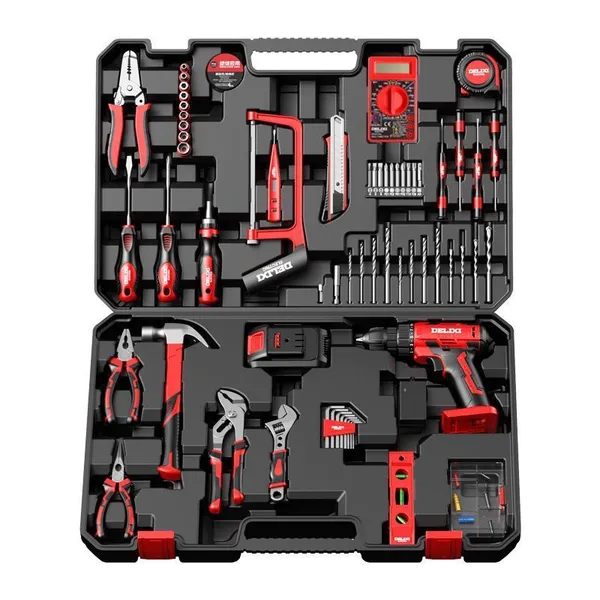 Read More
-
Writing an RFQ for Hardware Tools and Gas Torches
October 19, 2026An importer sent the same enquiry to three suppliers and received three quotes that could not be compared. One priced a torch hea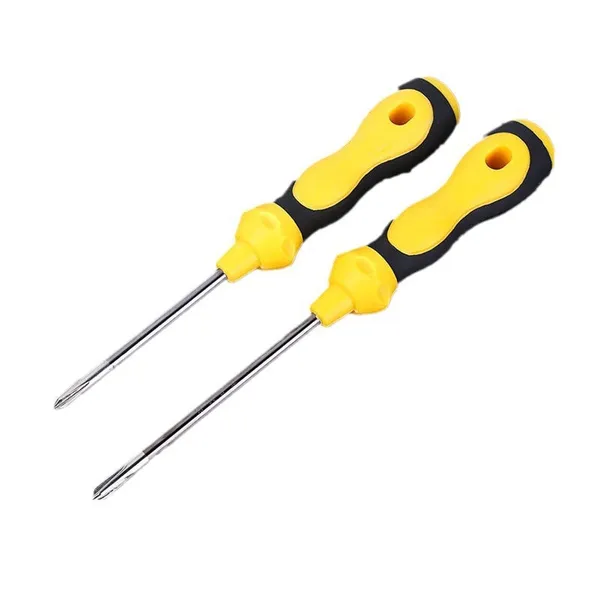 Read More
-
Improving Torch Thermal Efficiency in Brazing Work
October 19, 2026A burner that feels weak is often delivering exactly what its label says, and the heat is simply going somewhere other than the j Read More
-
Gas Torches in Jewelry Making and Precision Metalwork
October 16, 2026A repair bench once lost a ring setting to a flame that was too large rather than too hot. The torch was a workshop unit meant fo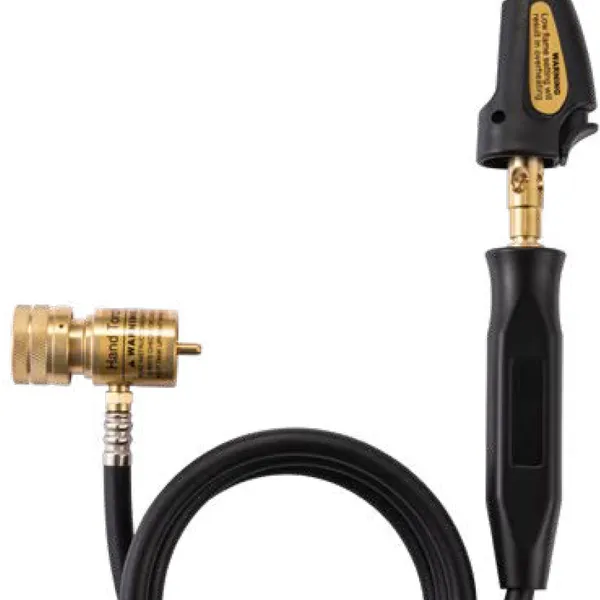 Read More

Contact Us
Recommended Products
-
 WT‑ST Heavy‑Duty Brass Valve MAPP/Propane Torch Adjustable Flame Gas Soldering TorchNegotiableMOQ: 100 Pieces
-
WT‑SSP Patented Self‑Igniting MAPP Gas Torch Stainless Steel Tip Heat‑Concentrating TorchNegotiableMOQ: 100 Pieces
-
WT‑SSA‑1 Heavy‑Duty Self‑Igniting MAPP Torch Aluminum Housing 360° Swivel Brazing TorchNegotiableMOQ: 100 Pieces
-
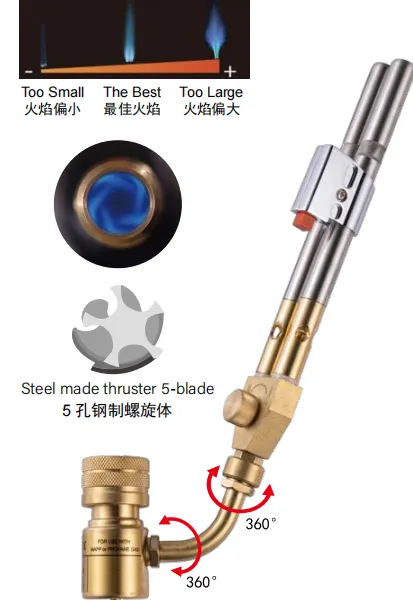
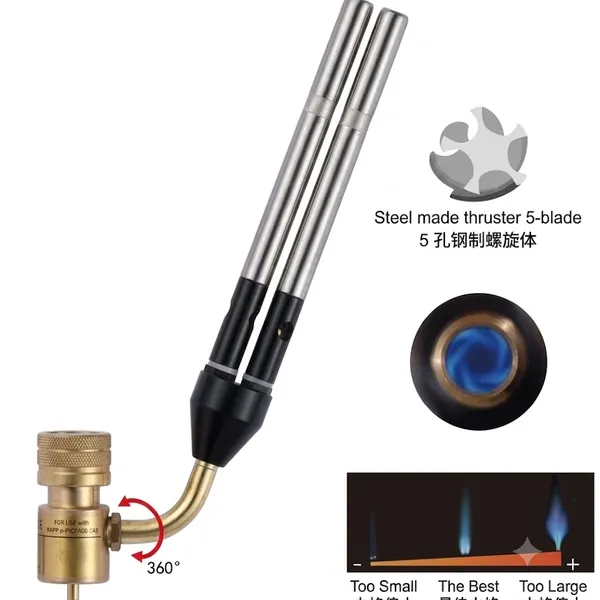
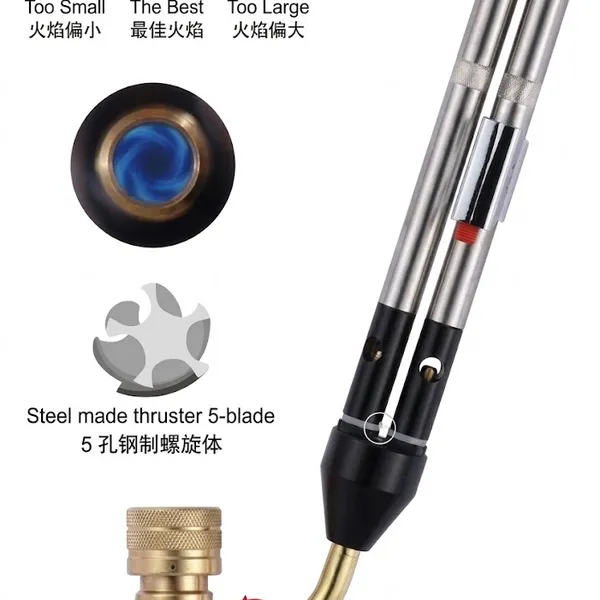
WT‑D1 Dual‑Tip High‑Heat MAPP Gas Torch 360° Swivel Twin Flame Copper Pipe Brazing TorchNegotiableMOQ: 100 Pieces
-
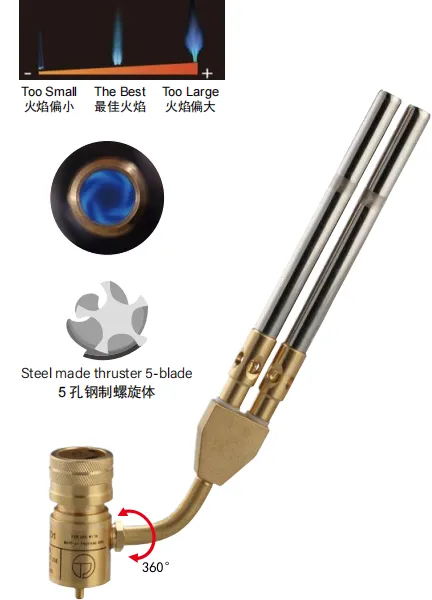
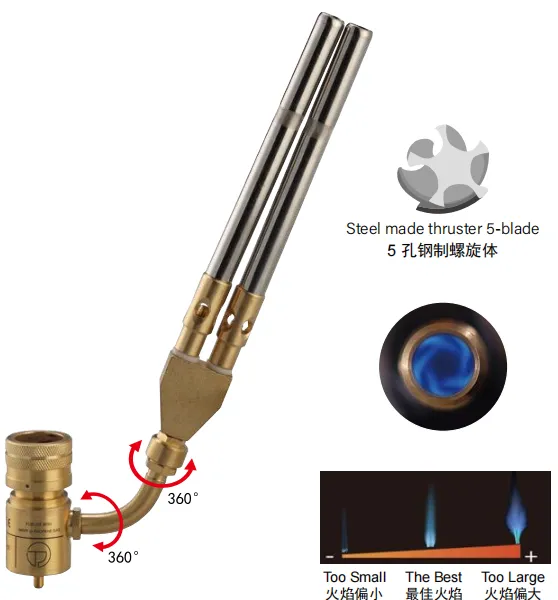
WT‑D2 Twin Flame MAPP Gas Torch 360° Two‑Way Swivel Dual Tip High‑Efficiency TorchNegotiableMOQ: 100 Pieces
-
WT‑D2SA Self‑Igniting Dual‑Tip MAPP Torch 360° Two‑Way Swivel Aluminum Igniter TorchNegotiableMOQ: 100 Pieces
-
WT‑D2P Patented Switchable Single/Dual Tip MAPP Torch 360° Two‑Way Swivel Brazing TorchNegotiableMOQ: 100 Pieces
-
WT‑D2AP Patented Switchable Dual‑Tip Self‑Igniting MAPP Torch Aluminum Housing TorchNegotiableMOQ: 100 Pieces
-
WT‑D1A Self‑Igniting Dual‑Tip MAPP Gas Torch 360° Swivel Twin Burner Pipe Welding TorchNegotiableMOQ: 100 Pieces
-
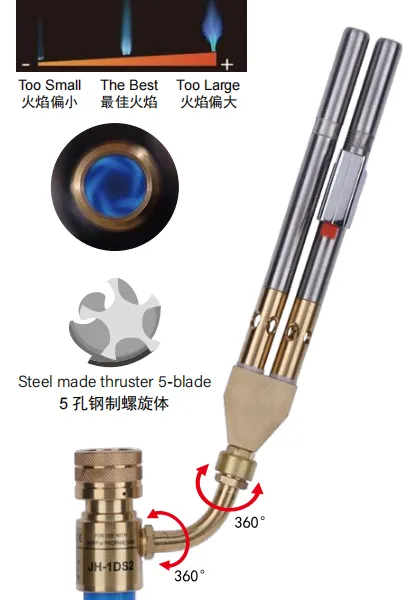
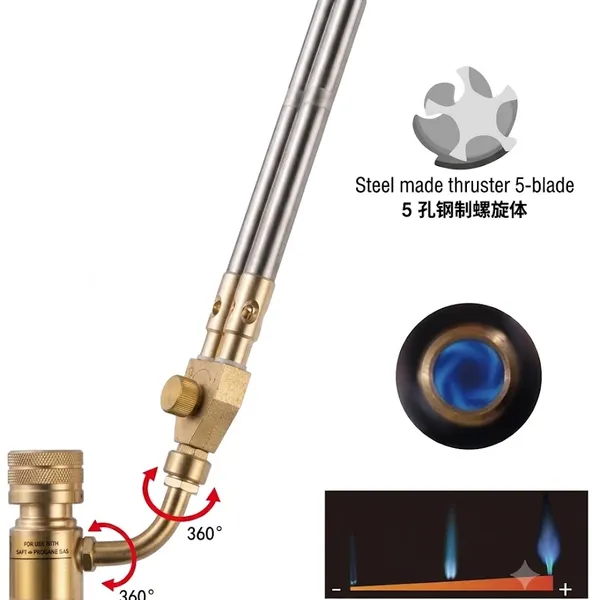
WT‑D1SA Premium Self‑Igniting Dual‑Tip MAPP Torch Aluminum Igniter Twin Flame TorchNegotiableMOQ: 100 Pieces
-
WT‑T Triple‑Tip Ultra High‑Output MAPP Gas Torch 360° Swivel Three‑Flame Brazing TorchNegotiableMOQ: 100 Pieces
-
WT‑TSA Self‑Igniting Triple‑Tip MAPP Gas Torch Aluminum Housing High‑Heat Brazing TorchNegotiableMOQ: 100 Pieces
-
WH‑SS Self‑Igniting MAPP Gas Hose Torch Flexible High‑Pressure Extension Soldering TorchNegotiableMOQ: 100 Pieces
-
WH‑SST Self‑Igniting Brass Tip MAPP Hose Torch Fast‑Cooling Extension Brazing TorchNegotiableMOQ: 100 Pieces
-
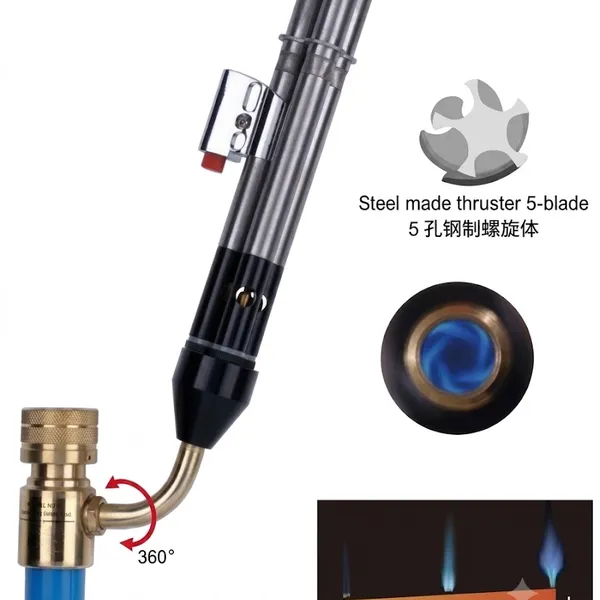
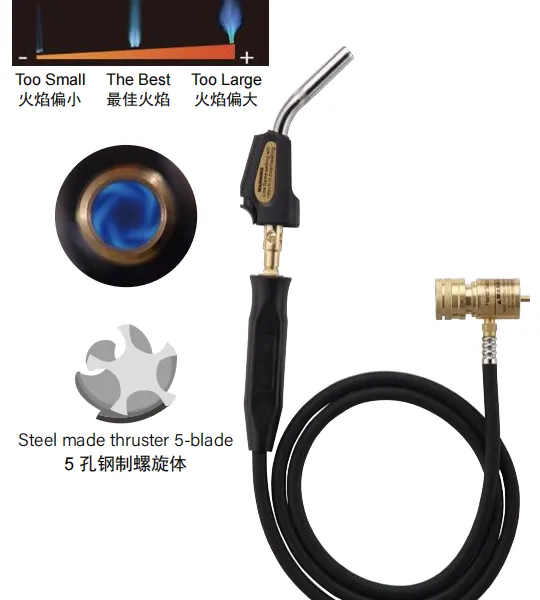
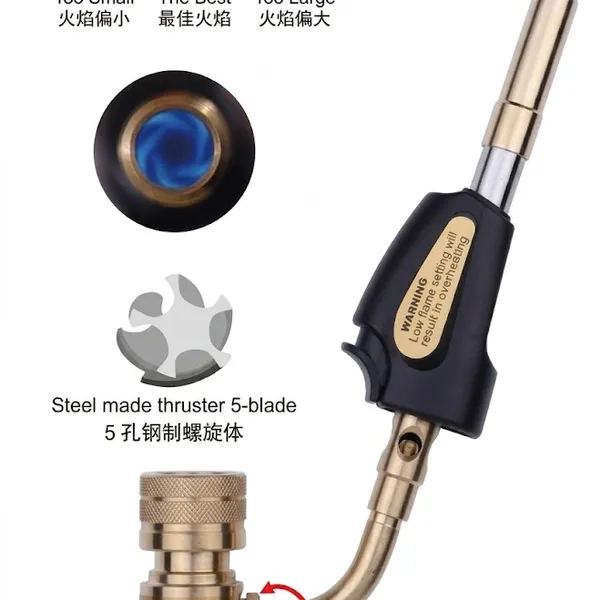
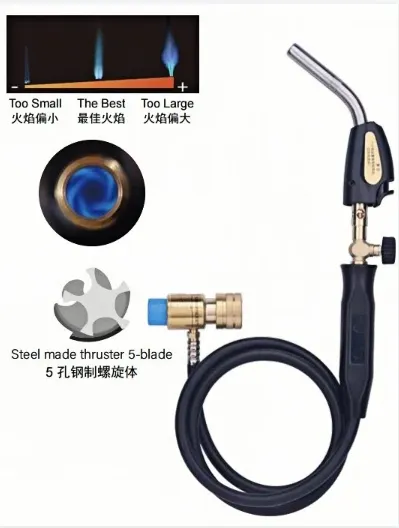
WH‑SSV MAPP Hose Torch With Needle‑Valve Flame Adjustment Self‑Igniting Extension TorchNegotiableMOQ: 100 Pieces
-
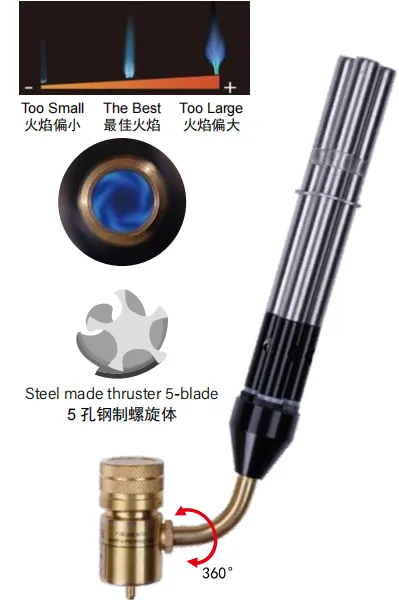
WH‑SSVT Deluxe MAPP Hose Torch With Needle‑Valve & Thick Brass Tip 6‑Blade Thruster TorchNegotiableMOQ: 100 Pieces
-
WH‑SSVTP Patented One‑Piece MAPP Hose Torch One‑Hand Needle‑Valve & Thick Brass TipNegotiableMOQ: 100 Pieces
-
WH‑DSVA Dual‑Tip MAPP Hose Torch With Needle Valve Self‑Igniting Aluminum Igniter TorchNegotiableMOQ: 100 Pieces
-
WH‑DSVAP Patented Switchable Dual‑Tip MAPP Hose Torch Needle‑Valve & Aluminum‑Body TorchNegotiableMOQ: 100 Pieces
-
WH‑SSVNP Patented Flexible Stainless Tube MAPP Hose Torch All‑Directional Gooseneck TorchNegotiableMOQ: 100 Pieces