
 Business License
Blog Categories

Gas Torches in Jewelry Making and Precision Metalwork
A repair bench once lost a ring setting to a flame that was too large rather than too hot. The torch was a workshop unit meant for pipe work, and the flame washed across the whole head of the ring before the solder had time to flow. The fix was not a lower setting but a smaller burner.
Gas torch jewelry making depends on matching a small flame to a small part, and the equipment has more in common with a watchmaker's bench than with a plumbing kit. A controlled flame of a few millimetres width does the work that a broad flame destroys.
This article covers why a gas torch suits jewelry work, how precision brazing torch use differs from general brazing, and how a jewelry soldering torch is chosen by tip and fuel. It closes with one repair case and the questions buyers send most often.
1. Why a Gas Torch Suits Jewelry Work
A gas torch suits jewelry work because the work itself is small, and heat has to be placed rather than spread.
Most joints on a ring, a chain or a setting are under 10 mm across, and the surrounding metal may be thinner than the joint. A broad flame raises the temperature of the whole piece, which risks distorting a thin shank or softening a soldered joint nearby.
A torch with a narrow flame heats the joint and leaves the rest of the piece below its annealing point. Solder then flows into the join while the adjacent detail stays unaffected.
Control matters as much as size. A torch that can be turned down to a small steady flame lets a bench hold one setting across a run of similar repairs, and Yichun Wentu Imp&Exp Trade Department lists hand torches with a needle valve for exactly this reason.
2. Small Flames and Precision Brazing Torch Use
Precision brazing torch use begins with the recognition that on small work the flame is measured in millimetres rather than in litres.
| Work | Typical flame width | Fuel |
|---|---|---|
| Chain link repair | 2 mm to 3 mm | Butane micro torch |
| Ring sizing and joint closure | 3 mm to 5 mm | Propane or MAPP hand torch |
| Setting and prong work | 2 mm to 4 mm | Butane with a fine tip |
| Larger holloware repair | 8 mm to 15 mm | MAPP with a wider tip |
The smallest flames come from micro torches using butane, which reach a working temperature high enough for silver solder without a hose set. They suit a bench where the piece is held in a third hand and the torch is moved in a short pass.
A propane or MAPP hand torch covers the middle of the range. It heats a ring joint in a handful of seconds and still allows the flame to be turned down for finer work on the same handle.
Wintooltech keeps a small single tip in its torch range for this audience, since a burner sized for a 15 mm pipe will overwhelm any joint a jeweller works on.
3. Choosing a Jewelry Soldering Torch: Tip and Fuel
A jewelry soldering torch is chosen by tip size first and fuel second, because the tip decides the flame and the fuel decides the temperature band.
The tip sets the width of the heated zone. A fine tip concentrates heat into a spot small enough for a prong, while a slightly larger tip covers a ring shank in a single pass without a second heating.
Fuel then sets the working range. Butane burns hot enough for silver solder in a micro torch, propane and MAPP cover silver and gold alloys, and a hydrogen-oxygen micro torch reaches the higher range needed for some platinum work.
Self-ignition is a convenience that matters on a bench, since a jeweller may light the torch 40 times in an hour. A piezo trigger removes the need to put the work down and pick up a lighter, which reduces the chance of disturbing a held piece.
Yichun Wentu lists micro torches and hand torches in the same range, because a bench often needs both a butane unit for fine work and a MAPP torch for a heavier setting. Sourcing the pair together avoids a mismatch between a tip thread and the handle it is meant to fit.
4. Heat Control Around Stones in Jewelry Soldering Torch Work
Heat control is the step that separates a successful repair from a ruined setting, and it is the reason a jewelry soldering torch is used with a shielding technique.
Most gemstones tolerate heat poorly, and thermal shock can crack a stone that was heated at one edge and left cool at the other. The usual protection is a heat sink and a shielding paste, which draw heat away from the stone and hold the temperature down while the joint is worked.
The flame is then directed at the metal rather than at the setting itself. Heat travels along the shank toward the joint, and the stone stays behind the path of the flame.
Where a stone cannot be shielded, it is often removed before the work and reset afterward. That step costs time, and it protects a stone that might otherwise be lost for a saving of a few minutes.
Thermal shock is the mechanism behind most stone damage, and it happens when one part of a stone is heated faster than another. Warming the whole piece gently before the flame reaches the joint reduces that gradient and gives a shielding paste time to work.
5. Fuel Choice in Gas Torch Jewelry Making With Propane or MAPP
Fuel choice in gas torch jewelry making comes down to the temperature band and the size of the flame a bench needs.
Butane suits micro torches and the smallest work. It produces a compact flame and a lower working temperature, which is gentle on thin chain and fine wire where a hotter flame would melt the piece.
Propane covers a wide middle range at a moderate cost. It heats silver and the lower gold alloys comfortably and remains stable on a hand torch with a single small tip.
MAPP and its stabilised equivalents release heat faster than propane and hold pressure more evenly as the cylinder empties. On a repair bench that brazes silver joints several times an hour, that steadier pressure reduces the number of adjustments between joints.
Wentu stocks fuels and tips as one range so that a bench can change fuel without changing the handle. That flexibility matters where a workshop takes in delicate chain work and heavier holloware repair in the same week.
6. Jigs, Third Hands and Precision Brazing Torch Use
The supporting tools around precision brazing torch use matter as much as the torch, because on small work both hands are usually occupied.
A third hand holds the piece while the flame is applied and the solder is fed. It removes the need to clamp a delicate piece, which can mark the metal or shift the joint as it is tightened.
A heat resistant block sits under the work and reflects heat back into the joint. It also protects the bench and keeps the piece from cooling through contact with a metal surface.
Fine tweezers and a solder pick complete the set. A pick places a small pallion of solder exactly where it is wanted, which is more accurate than feeding wire into a flame and hoping it lands in the joint.
7. Flux and Alloys in Gas Torch Jewelry Making
Flux and alloy choice decide the temperature at which the joint closes, and both interact with the flame setting.
Silver solder alloys flow across a range between roughly 600 °C and 800 °C depending on the grade, and the grade is chosen so that it flows below the melting point of the parts being joined. A lower grade flows earlier and gives the bench more margin.
Flux keeps the joint clean as it heats. A borax based flux dissolves surface oxides and lets the alloy wet the metal, and a joint that balls up on the surface often has a flux problem rather than a heat problem.
Heat and flux are then balanced against each other. Too little heat leaves the flux unactivated, while too much burns it off before the alloy flows, and either fault leaves a joint that looks closed and is not.
Wentu suggests keeping two grades of silver solder at the bench and marking the flow range on each container. The grade decides the temperature at which the joint closes, and a bench that mixes the grades loses that reference.
8. A Repair Bench Case: Precision Brazing Torch Use on Silver
A repair bench working on silver rings under 20 mm changed its torch after a run of distorted shanks.
The bench had used a workshop torch with a broad flame, and rings that needed sizing came back slightly oval because the whole shank had been raised to annealing temperature. Two of every ten repairs were returned for reshaping.
Switching to a hand torch with a 3 mm tip and turning the valve down to a small flame concentrated the heat at the joint. Sizing time fell from about 6 minutes to under 3, and the returns for reshaping stopped over the following month.
The bench kept the larger torch for holloware repair, where the wider flame was an advantage. The lesson was that precision brazing torch use is about matching the flame to the piece rather than about using the smallest available tip on everything.
9. Frequently Asked Questions About the Jewelry Soldering Torch
9.1 What makes a jewelry soldering torch different from a plumbing torch?
A jewelry soldering torch is defined by flame size rather than by fuel, since the same propane or MAPP cylinder can feed either. Jewellery work involves joints under about 10 mm and metal thinner than the joint, so the flame has to be narrow enough to heat the joint without raising the temperature of the whole piece. A plumbing torch with a wide burner can anneal a thin shank or soften an adjacent joint in the seconds it takes to bring the work area up to temperature.
9.2 Which fuel suits gas torch jewelry making on silver?
Propane and MAPP both suit gas torch jewelry making on silver, and the choice turns on the size of the flame and the size of the workshop. Butane micro torches cover the smallest joints, such as chain links and prong work, where a compact flame protects thin metal. Propane covers the middle range at a moderate cost, while MAPP releases heat faster and holds pressure more evenly as the cylinder empties, which reduces adjustment between joints on a bench brazing silver several times an hour.
9.3 How is heat kept away from stones during precision brazing torch use?
Heat is kept away from stones in precision brazing torch use by a combination of shielding and direction. A heat sink and a shielding paste draw heat away from the stone and hold its temperature down while the joint is worked, and the flame is aimed at the metal so that heat travels along the shank toward the joint. Where a stone cannot be shielded it is often removed before the work and reset afterward, which costs a few minutes and protects a stone that heat could otherwise crack through thermal shock.
9.4 Why does solder ball up instead of flowing into the joint?
Solder that balls up on the surface usually means the metal is below its flow temperature, and the answer is more heat rather than more alloy. A second cause is flux that has burned off before the alloy reached its range, which leaves the surface oxidised so the alloy cannot wet it. A third is a gap that is too wide to draw the alloy in, since flow depends on capillary action across a small clearance. Checking heat, flux and fit in that order finds the cause in most cases.
Recently Posted
-
Flame Temperature and Gas Pressure Specifications for Torches
October 16, 2026Two torches with the same headline flame temperature can behave quite differently on the bench, because the second figure on the Read More
 -
Self Igniting vs Manual Ignition Gas Torches
October 16, 2026A technician on a roof replaced a torch mid job and noticed that the two models weighed the same and lit the same flame, yet one Read More
 -
Introduction to Air Fuel Torches: MAPP, Propane and LPG
October 15, 2026A workshop bought a torch for brazing refrigeration lines and found the flame too soft to bring a joint up to temperature. The to Read More
 -
What Is a MAPP Gas Torch? Definition and Core Components
October 15, 2026A technician new to refrigeration work once asked why a 22 mm brazed joint that took 20 minutes with a propane torch came togethe Read More

Contact Us
Recommended Products
-
 WT‑SSA Premium Aluminum Housing Self‑Igniting MAPP Torch, 360° Swivel Stainless Tip TorchNegotiableMOQ: 100 Pieces
 -
WT‑SST Self‑Igniting Brass Tip MAPP Torch, 360° Swivel Fast‑Cooling Premium Brazing TorchNegotiableMOQ: 100 Pieces
-
WT‑SS Self‑Igniting MAPP Gas Torch, 360° Swivel Stainless Steel Tip High‑Heat Brazing BlowtorchNegotiableMOQ: 100 Pieces
-
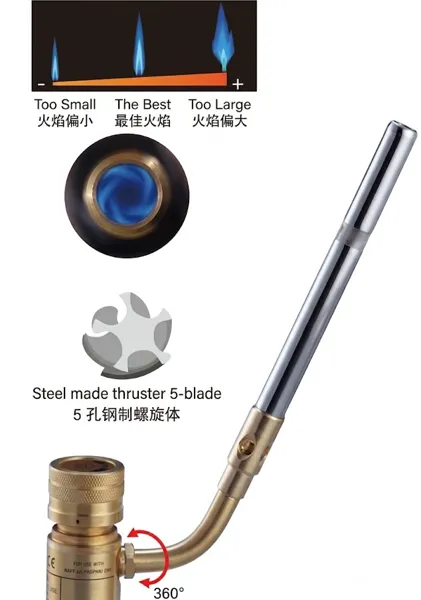
WT‑S 360° Swivel Single‑Tip MAPP/Propane Gas Torch, Stainless Steel Tip Manual Ignition Brazing TorchNegotiableMOQ: 100 Pieces
-
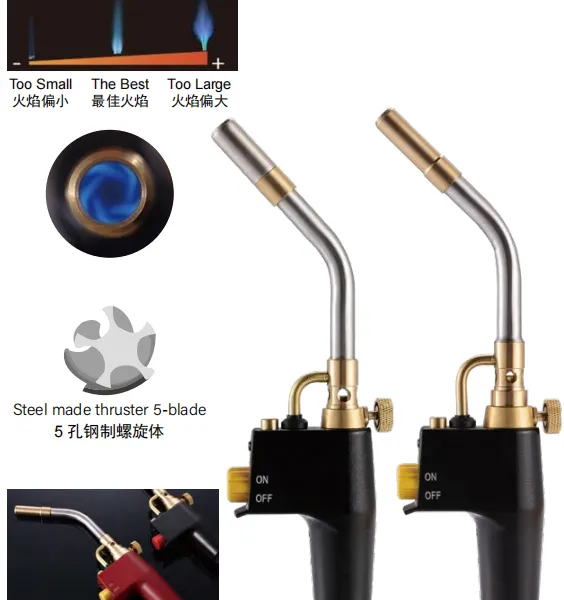
WT‑5STA Premium Aluminum‑Handle Pistol‑Grip MAPP Torch Heavy‑Duty Brass‑Tip Welding TorchNegotiableMOQ: 100 Pieces
-
WT‑5ST Pistol‑Grip MAPP Gas Torch With Fast‑Cooling Brass Tip Safety‑Lock TorchNegotiableMOQ: 100 Pieces
-
WT‑5S Ergonomic Pistol‑Grip MAPP Gas Torch Instant‑Ignition Safety‑Lock Brazing TorchNegotiableMOQ: 100 Pieces
-
WH‑DSVP Patented Switchable Dual‑Tip MAPP Hose Torch One‑Hand Needle‑Valve TorchNegotiableMOQ: 100 Pieces
-
WH‑SSVNP Patented Flexible Stainless Tube MAPP Hose Torch All‑Directional Gooseneck TorchNegotiableMOQ: 100 Pieces
-
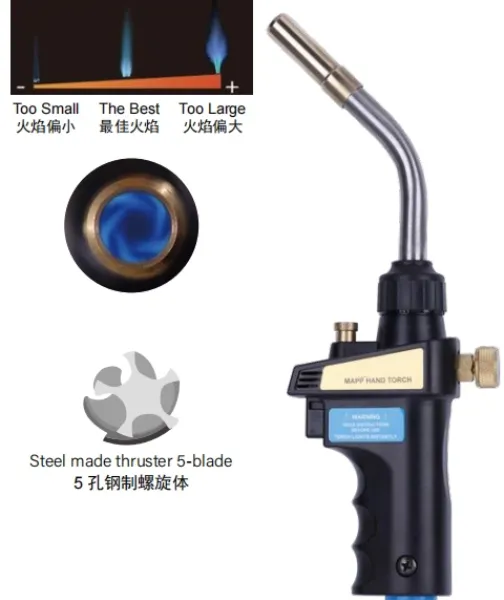
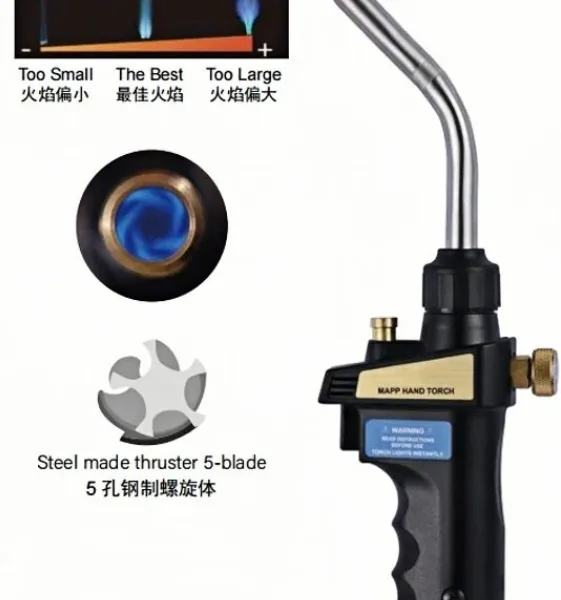
WH‑DSVAP Patented Switchable Dual‑Tip MAPP Hose Torch Needle‑Valve & Aluminum‑Body TorchNegotiableMOQ: 100 Pieces
-
WH‑DSVA Dual‑Tip MAPP Hose Torch With Needle Valve Self‑Igniting Aluminum Igniter TorchNegotiableMOQ: 100 Pieces
-
WH‑SSVTP Patented One‑Piece MAPP Hose Torch One‑Hand Needle‑Valve & Thick Brass TipNegotiableMOQ: 100 Pieces
-
WH‑SSVT Deluxe MAPP Hose Torch With Needle‑Valve & Thick Brass Tip 6‑Blade Thruster TorchNegotiableMOQ: 100 Pieces
-
WH‑SSV MAPP Hose Torch With Needle‑Valve Flame Adjustment Self‑Igniting Extension TorchNegotiableMOQ: 100 Pieces
-
WH‑SST Self‑Igniting Brass Tip MAPP Hose Torch Fast‑Cooling Extension Brazing TorchNegotiableMOQ: 100 Pieces
-
WH‑SS Self‑Igniting MAPP Gas Hose Torch Flexible High‑Pressure Extension Soldering TorchNegotiableMOQ: 100 Pieces
-
WT‑TSA Self‑Igniting Triple‑Tip MAPP Gas Torch Aluminum Housing High‑Heat Brazing TorchNegotiableMOQ: 100 Pieces
-
WT‑T Triple‑Tip Ultra High‑Output MAPP Gas Torch 360° Swivel Three‑Flame Brazing TorchNegotiableMOQ: 100 Pieces
-
WT‑D1SA Premium Self‑Igniting Dual‑Tip MAPP Torch Aluminum Igniter Twin Flame TorchNegotiableMOQ: 100 Pieces
-
WT‑D1A Self‑Igniting Dual‑Tip MAPP Gas Torch 360° Swivel Twin Burner Pipe Welding TorchNegotiableMOQ: 100 Pieces