
 Business License
Blog Categories

Self Igniting vs Manual Ignition Gas Torches
A technician on a roof replaced a torch mid job and noticed that the two models weighed the same and lit the same flame, yet one took three attempts on every start. The difference sat in the ignition rather than in the burner.
The self igniting vs manual torch question is really a question about where the spark comes from and what that costs across a season. Both types burn the same gas and reach the same temperature, so the decision rests on starting, handling and upkeep rather than on flame quality.
This article compares the two by gas torch ignition type, sets out where each torch ignition choice suits the work, and covers ignition in wind and cold. It closes with a site case and the questions buyers send most.
1. What the Self Igniting vs Manual Torch Comparison Covers
A self igniting vs manual torch comparison comes down to how the flame is started and what that means across a working day.
A self igniting torch carries its own spark source, usually a piezo crystal that produces a voltage when it is struck. A manual torch has no spark source and needs a match, a lighter or a pilot flame from a separate tool.
The comparison covers three practical points rather than one: how many starts a day needs, what happens when a hand is already holding a fitting, and how much upkeep each mechanism needs. The table below sets out the two types side by side on those points.
| Point | Self igniting torch | Manual torch |
|---|---|---|
| Spark source | Piezo or flint inside the handle | Match, lighter or a pilot flame |
| Start with both hands busy | One trigger press | Needs a free hand |
| Consumable part | Flint on a wheel type, none on a piezo | Matches and lighters |
| Flame output | Same head, same flame | Same head, same flame |
The heat delivered at the joint does not enter into it. The same head and the same gas produce the same flame on either torch, so a buyer is choosing a starting method rather than a level of heat. Yichun Wentu Imp&Exp Trade Department lists both types against the same head sizes for this reason.
2. Gas Torch Ignition Type: Piezo and Flint Mechanisms
The most common gas torch ignition type is the piezo trigger, which uses a crystal that produces a spark when a spring loaded hammer strikes it.
A piezo needs no consumable part. The crystal and the hammer sit inside the handle, and a trigger press both opens the valve and strikes the crystal in one movement, so the operator keeps one hand on the torch and the other on the work.
A second self igniting type uses a flint wheel, where a wheel turns against a flint to throw a spark. A flint wears as it is used, so this type carries a replaceable part even though the torch itself is self igniting.
The practical difference between the two is the failure mode. A piezo either sparks or it does not, while a flint weakens gradually and warns the operator before it stops.
3. Torch Ignition Choice: Match and Lighter Starting
A manual torch has no ignition of its own, so the torch ignition choice in use is whatever the operator carries.
A match or a lighter means the flame source is held beside the tip while the valve is opened. That works well at a bench where both hands are free, and it becomes awkward when one hand is holding a fitting in place.
A match and a lighter are bought by the box, and a box lasts a bench several months at a working pace. A flint is a single small part and a piezo has no part at all, so the running difference across a season is smaller than the purchase difference between the two torches.
Some technicians keep a pilot flame on a separate torch and light the working torch from it. This removes the need to strike a match with a hand already occupied, at the cost of a second gas supply on the bench.
The manual type has the advantage of fewer parts inside the torch. Nothing in the handle can wear out except the valve, which is why manual torches often outlast self igniting ones in heavy use.
4. How the Self Igniting vs Manual Torch Decision Changes Work
A self igniting vs manual torch decision changes how a task is sequenced rather than how well it is done.
On a task with many short heating cycles, the self igniting torch saves a movement each time. Lighting a torch 60 times a day with a match adds a step to every cycle, and the steps add up across a shift.
On a task with one long heating cycle, the difference all but disappears. Where a joint is heated once and held for several minutes, the seconds spent on a match are lost in the work.
The decision also follows where the torch is stored. A torch that lives on a bench suits a manual start, while one carried up a ladder or across a roof suits a self igniting type.
Wintooltech supplies both types in the same body sizes, so a team can standardise on one shape and choose the ignition to suit each task.
5. Gas Torch Ignition Type and Cylinder Handling
The gas torch ignition type interacts with cylinder handling, because a torch that cannot be lit at a distance needs a hand near the flame.
A self igniting torch is lit in place, so the operator can keep a glove on and hold the torch at arm's length. A manual torch brings a match to the tip, which means a hand close to the flame path on a cold morning.
Where the cylinder is carried on a shoulder strap, a self igniting torch removes a second object from the hands. Where it sits on a trolley, a manual start costs little.
The glove point matters on a roof or in a plant room, where a hand near the flame is a hand that cannot hold a fitting. Two hands free at the moment of lighting shortens the gap between reaching a joint and heating it.
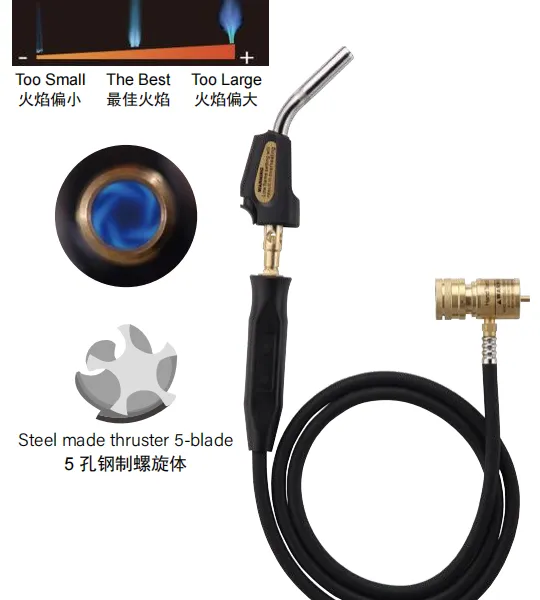
A hose torch adds a further point, since the flame sits at the end of a hose rather than at the handle. On a hose torch the self igniting trigger may sit on the handle, so a helper is sometimes needed to start the flame.
6. Torch Ignition Choice in Wind and Cold
Wind and cold affect the torch ignition choice more than most buyers expect.
A match is difficult to strike in wind, and a lighter flame is easily blown out. A self igniting torch throws a spark directly at the gas at the tip, so moving air has less chance to interfere.
Cold slows a piezo slightly, since the grease inside the mechanism thickens, and a trigger may need a firmer press on a winter morning. This is a small effect rather than a failure.
A flint wheel suffers more in the cold, because the wheel can slip against the flint. Wentu advises keeping the torch inside a coat between tasks on cold mornings, which is often enough to remove the problem.
7. Maintenance Load by Gas Torch Ignition Type
Maintenance load follows the gas torch ignition type rather than the gas used.
A piezo needs no scheduled part. When it stops sparking, the cause is usually a worn hammer or a cracked crystal, and the torch goes to a bench rather than being repaired on site.
A flint wheel needs a new flint at intervals, which is a task an operator can complete in a minute. The interval depends on how often the torch is lit, and a torch lit 60 times a day will use flints faster than one lit on a single job.
A manual torch has no ignition parts to service, and its upkeep is limited to the valve and the tip. The cost sits in consumables, since matches and lighters are bought in place of a spare flint or nothing at all.
Spare parts are worth keeping in the van rather than in the office. A flint that can be changed in a minute on site saves a return trip, and a spare piezo assembly does the same for a self igniting torch.
Wentu keeps spare flints and piezo assemblies for the self igniting range, so a repair does not mean replacing a whole torch.
8. A Field Case: Self Igniting vs Manual Torch on Site
A refrigeration crew moved from manual torches to self igniting ones after a run of awkward starts on plant room work.
The crew was lighting its torch an estimated 70 times a day on a chiller replacement, and a match was needed each time in a space where both hands were often busy with a fitting. The extra step added a few seconds to every cycle.
The move removed the match but added a new requirement. New self igniting torches arrived with a stiff trigger, and the crew needed a short break in period of about 200 presses before the mechanism settled.
The crew kept 2 manual torches for outdoor roof work, where the stored torches were easier to maintain. The split let the team use the right torch for each part of the job rather than one type everywhere.
Yichun Wentu advises buyers to run a short trial with both types, since the answer depends on the number of starts a day rather than on the torch itself.
9. Frequently Asked Questions About the Self Igniting vs Manual Torch Choice
9.1 Is a self igniting torch worth the higher outlay?
A self igniting torch pays back where a working day holds many short heating cycles, because every start saves a movement. Where a torch is lit 60 times a day, the saved steps add up across a shift and the higher outlay is recovered in a season. Where a joint is heated once and held for several minutes, the saved seconds disappear into the work and the manual type remains a sound choice. The decision follows the number of starts rather than the price of either torch.
9.2 Which gas torch ignition type lasts longer?
A manual torch usually lasts longest, because its wearing parts are the valve and the tip. A flint wheel torch needs a new flint at intervals, but the wheel and body continue in service across many flints. A piezo torch has no consumable part and either sparks or does not, so when it stops the torch goes to a bench for a hammer or crystal replacement. Upkeep across a season therefore follows the mechanism rather than the amount of work the torch does.
9.3 What torch ignition choice suits outdoor work?
Outdoor work favours a self igniting torch, because a spark thrown at the tip is less affected by moving air than a match or a lighter flame. Cold slows a piezo slightly, and a firmer trigger press on a winter morning is usually enough to overcome it. A flint wheel suffers more in the cold, since the wheel can slip against the flint. Keeping the torch inside a coat between tasks removes most of the difficulty on a cold site.
9.4 Can a manual torch be converted to self igniting?
A manual torch is not converted at the bench, because the spark source sits inside the handle rather than at the tip. Where a team wants both options, the practical route is to keep two torches that share the same head and hose fittings. That way the tips, hoses and cylinder connections stay interchangeable and a change of type does not mean a change of the whole kit. Yichun Wentu builds both types on the same body sizes so that a mixed kit stays compatible.
Recently Posted
-
Gas Torches in Jewelry Making and Precision Metalwork
October 16, 2026A repair bench once lost a ring setting to a flame that was too large rather than too hot. The torch was a workshop unit meant fo Read More
 -
Flame Temperature and Gas Pressure Specifications for Torches
October 16, 2026Two torches with the same headline flame temperature can behave quite differently on the bench, because the second figure on the Read More
 -
Introduction to Air Fuel Torches: MAPP, Propane and LPG
October 15, 2026A workshop bought a torch for brazing refrigeration lines and found the flame too soft to bring a joint up to temperature. The to Read More
 -
What Is a MAPP Gas Torch? Definition and Core Components
October 15, 2026A technician new to refrigeration work once asked why a 22 mm brazed joint that took 20 minutes with a propane torch came togethe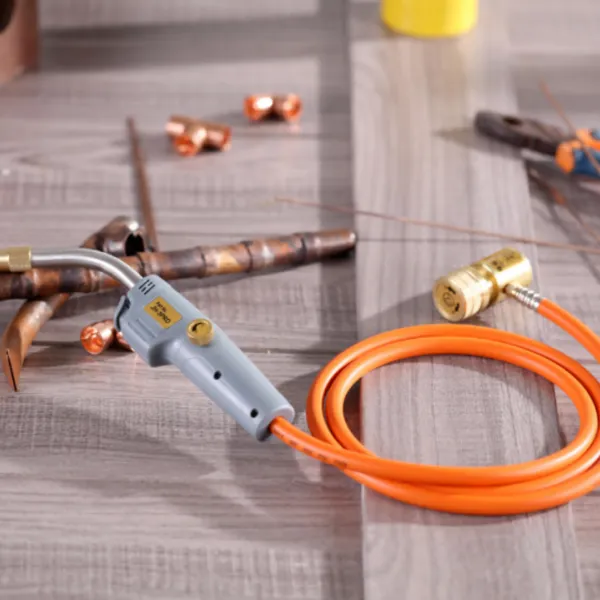 Read More

Contact Us
Recommended Products
-
 WT‑SSA Premium Aluminum Housing Self‑Igniting MAPP Torch, 360° Swivel Stainless Tip TorchNegotiableMOQ: 100 Pieces
 -
WT‑SST Self‑Igniting Brass Tip MAPP Torch, 360° Swivel Fast‑Cooling Premium Brazing TorchNegotiableMOQ: 100 Pieces
-
WT‑SS Self‑Igniting MAPP Gas Torch, 360° Swivel Stainless Steel Tip High‑Heat Brazing BlowtorchNegotiableMOQ: 100 Pieces
-
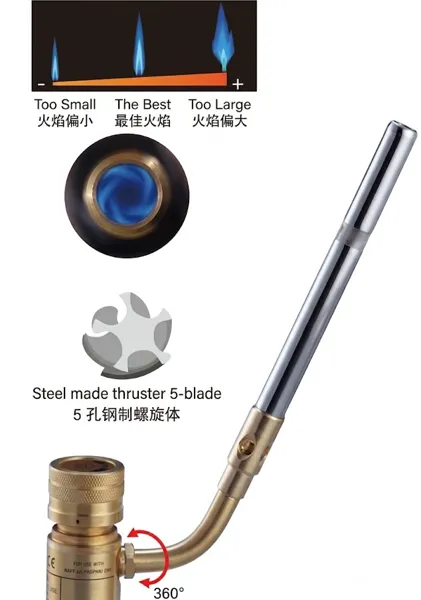
WT‑S 360° Swivel Single‑Tip MAPP/Propane Gas Torch, Stainless Steel Tip Manual Ignition Brazing TorchNegotiableMOQ: 100 Pieces
-
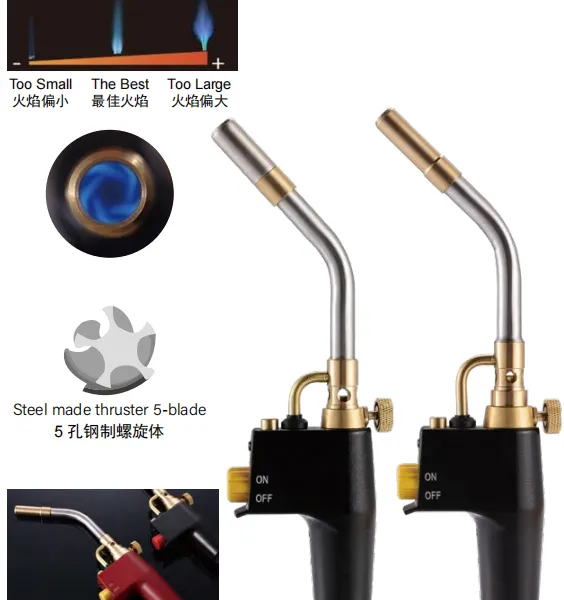
WT‑5STA Premium Aluminum‑Handle Pistol‑Grip MAPP Torch Heavy‑Duty Brass‑Tip Welding TorchNegotiableMOQ: 100 Pieces
-
WT‑5ST Pistol‑Grip MAPP Gas Torch With Fast‑Cooling Brass Tip Safety‑Lock TorchNegotiableMOQ: 100 Pieces
-
WT‑5S Ergonomic Pistol‑Grip MAPP Gas Torch Instant‑Ignition Safety‑Lock Brazing TorchNegotiableMOQ: 100 Pieces
-
WH‑DSVP Patented Switchable Dual‑Tip MAPP Hose Torch One‑Hand Needle‑Valve TorchNegotiableMOQ: 100 Pieces
-
WH‑SSVNP Patented Flexible Stainless Tube MAPP Hose Torch All‑Directional Gooseneck TorchNegotiableMOQ: 100 Pieces
-
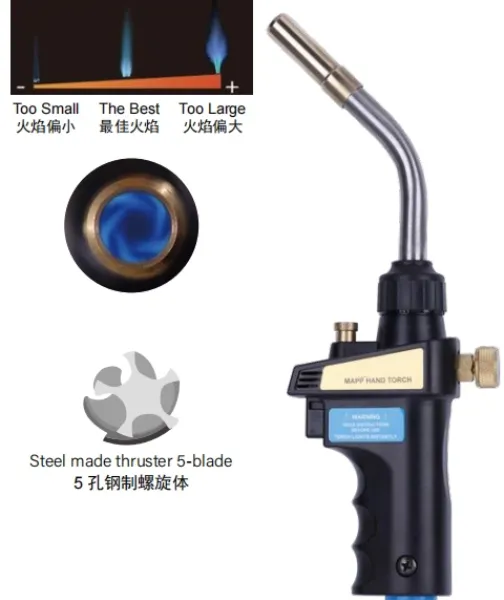
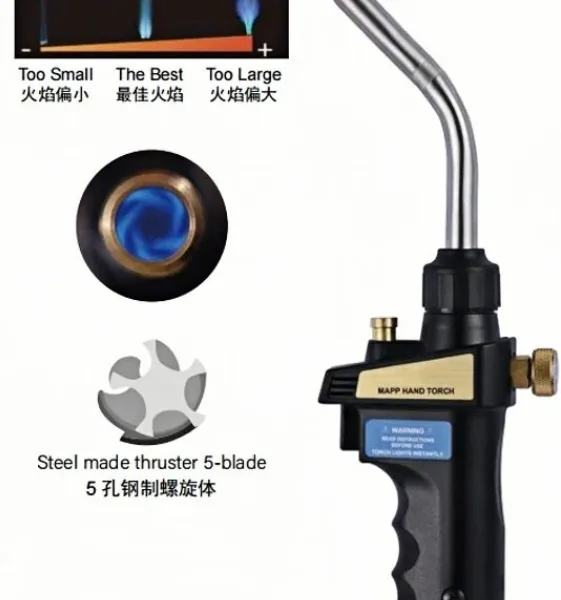
WH‑DSVAP Patented Switchable Dual‑Tip MAPP Hose Torch Needle‑Valve & Aluminum‑Body TorchNegotiableMOQ: 100 Pieces
-
WH‑DSVA Dual‑Tip MAPP Hose Torch With Needle Valve Self‑Igniting Aluminum Igniter TorchNegotiableMOQ: 100 Pieces
-
WH‑SSVTP Patented One‑Piece MAPP Hose Torch One‑Hand Needle‑Valve & Thick Brass TipNegotiableMOQ: 100 Pieces
-
WH‑SSVT Deluxe MAPP Hose Torch With Needle‑Valve & Thick Brass Tip 6‑Blade Thruster TorchNegotiableMOQ: 100 Pieces
-
WH‑SSV MAPP Hose Torch With Needle‑Valve Flame Adjustment Self‑Igniting Extension TorchNegotiableMOQ: 100 Pieces
-
WH‑SST Self‑Igniting Brass Tip MAPP Hose Torch Fast‑Cooling Extension Brazing TorchNegotiableMOQ: 100 Pieces
-
WH‑SS Self‑Igniting MAPP Gas Hose Torch Flexible High‑Pressure Extension Soldering TorchNegotiableMOQ: 100 Pieces
-
WT‑TSA Self‑Igniting Triple‑Tip MAPP Gas Torch Aluminum Housing High‑Heat Brazing TorchNegotiableMOQ: 100 Pieces
-
WT‑T Triple‑Tip Ultra High‑Output MAPP Gas Torch 360° Swivel Three‑Flame Brazing TorchNegotiableMOQ: 100 Pieces
-
WT‑D1SA Premium Self‑Igniting Dual‑Tip MAPP Torch Aluminum Igniter Twin Flame TorchNegotiableMOQ: 100 Pieces
-
WT‑D1A Self‑Igniting Dual‑Tip MAPP Gas Torch 360° Swivel Twin Burner Pipe Welding TorchNegotiableMOQ: 100 Pieces