
 Business License
Blog Categories

Introduction to Air Fuel Torches: MAPP, Propane and LPG
A workshop bought a torch for brazing refrigeration lines and found the flame too soft to bring a joint up to temperature. The torch was fine. The fuel was the wrong one for the job.
This article covers air fuel torch basics, sets out a mapp propane lpg comparison on the figures a bench buyer uses, and explains what should drive fuel gas torch selection. A small shop case and the common questions follow.
1. Air Fuel Torch Basics: How the Flame Is Made
Air fuel torch basics come down to one difference from a welding set: the torch draws its oxygen from the surrounding air rather than from a cylinder.
A single gas line feeds the torch. Fuel leaves a jet, mixes with air drawn in through ports in the burner, and burns at the tip.
The air mix is set by the jet size and the port area rather than by a second regulator, so the flame is simpler to control than an oxy-fuel flame.
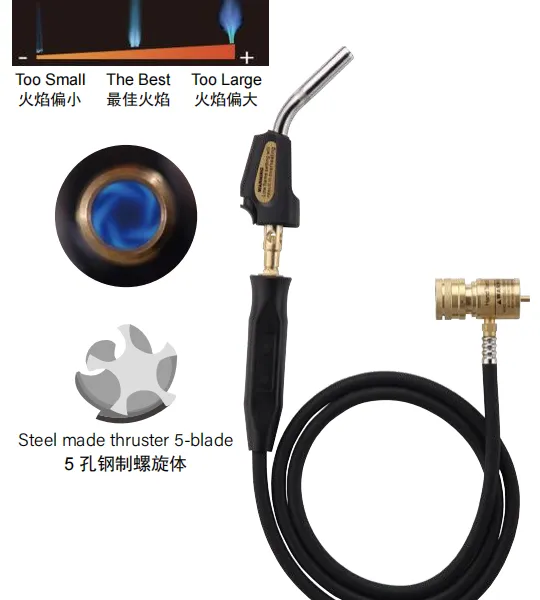
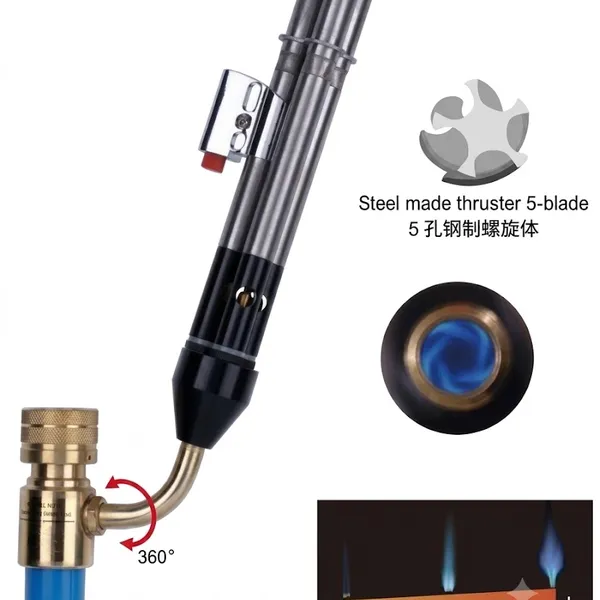
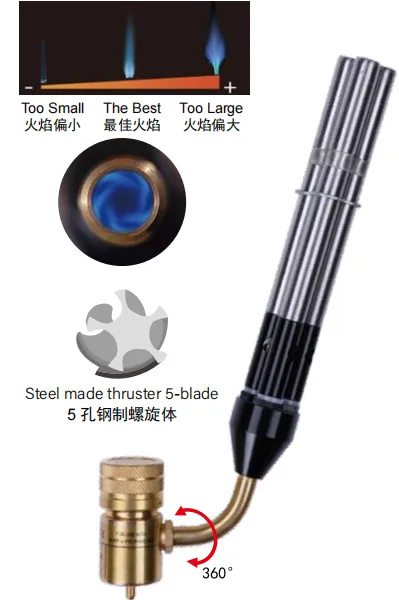
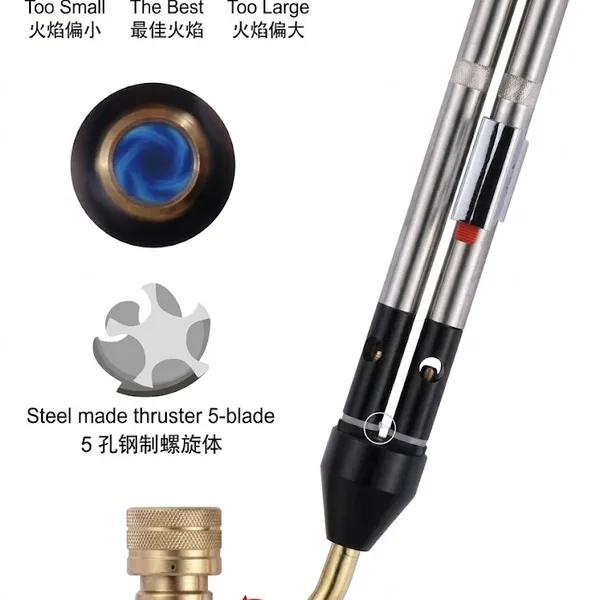
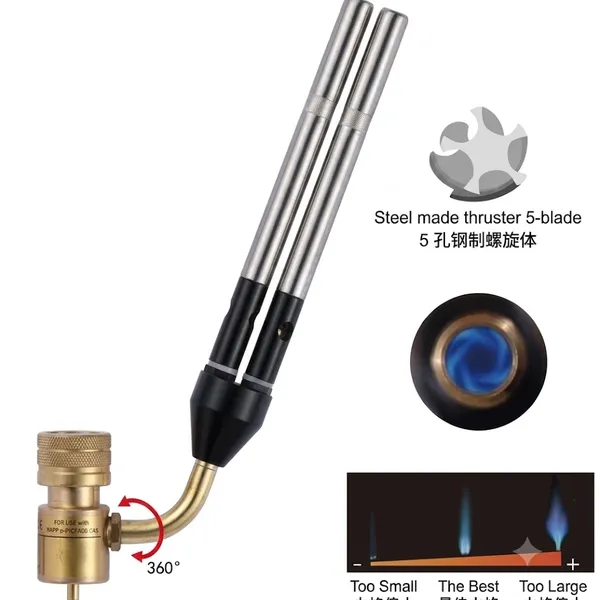
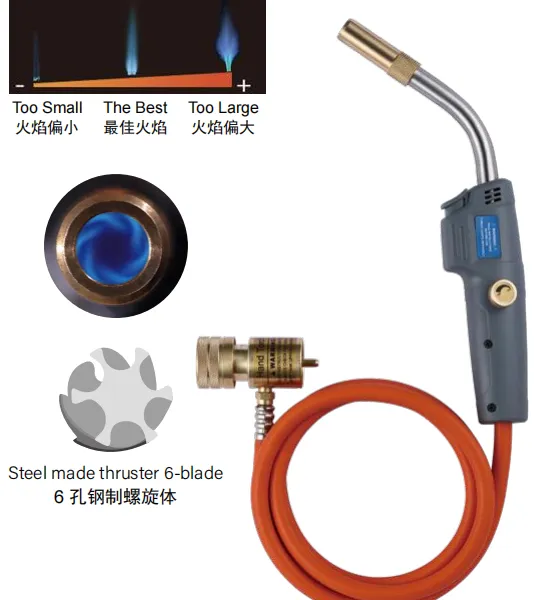
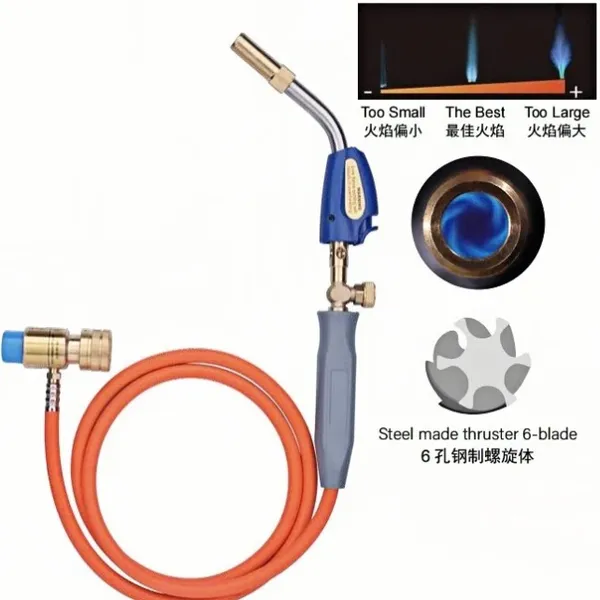
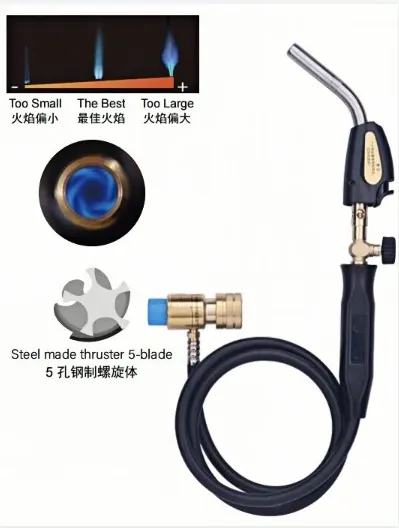
A hotter flame needs a richer fuel jet or more air at the burner. A swirl machined into the burner tube mixes the two streams and holds the flame at the tip.
The lower heat of an air flame is the trade for the simple set. There is one cylinder, one hose and one regulator to manage at the bench.
Wintooltech keeps the three common fuels on one bench chart, so a buyer can see which fuel suits which joint before a torch is chosen at all.
A torch also needs a moment to settle. The flame reaches its working shape within about 10 seconds of ignition, once the jet and the ports have warmed through.
2. MAPP Propane LPG Comparison: Heat and Temperature
A mapp propane lpg comparison usually starts with flame temperature, and that figure decides which jobs a fuel can take on.
Propane in air reaches about 1,927 °C, which suits soft soldering, thawing and light heating on copper and steel.
MAPP gas in air reaches about 2,926 °C, near the top of what an air torch can produce, and it shortens brazing time on a copper joint quite noticeably.
LPG sits close to propane. A commercial LPG mix burns within roughly a hundred degrees of propane and is chosen mainly on local supply.
The table sets out the three fuels on the figures a bench buyer compares.
| Fuel | Flame temperature in air | Typical cylinder |
|---|---|---|
| Propane | about 1,927 °C | 5 to 20 kg |
| LPG mix | about 1,900 to 2,000 °C | 5 to 20 kg |
| MAPP | about 2,926 °C | 400 g to 1 kg |
The table also shows why MAPP packs a small cylinder. A higher flame temperature does more work per minute, so the fuel is sold in small units and handled often.
3. Fuel Gas Torch Selection by Job
Fuel gas torch selection follows the joint rather than the price, and the joint sets a heat input that has to be reached and then held.
Soft soldering on copper pipe needs about 200 °C at the joint and takes a propane flame without difficulty.
Brazing a copper line or a refrigeration joint needs 600 °C to 800 °C at the work, which a MAPP flame reaches faster than propane.
Heating a seized part for removal sits between the two. A propane flame held for longer often frees a joint where a short MAPP flame would overheat it.
A large mass changes the answer again. A thick casting draws heat away from the joint, so a torch that suits a thin tube may not hold the temperature.
A bench with a mix of work usually keeps two torches rather than one, since no single fuel covers soft soldering and thick section brazing equally.
Flame position matters as much as the fuel. Holding the tip about 15 mm from the work puts the hot inner cone on the joint, while a larger gap wastes heat into the air.
4. Air Fuel Torch Basics: The Three Main Fuels
Air fuel torch basics cover three fuels in ordinary trade use, and each one arrives in a cylinder sized to the way it is used.
Propane is the most widely supplied. It is sold in cylinders from a small camping size up to a 47 kg industrial cylinder.
LPG is a blend of propane and butane, and its mix varies with the supplier and the season, which changes the flame a little from batch to batch.
MAPP gas is a stabilised fuel. The original methylacetylene-propadiene blend has largely been replaced in many markets by a propylene based substitute sold under the same name.
The substitute burns a little cooler than the original blend but stays well above propane, which is why a bench that needs a hot air flame still asks for MAPP by name.
A cylinder also holds a figure worth knowing before a job is quoted. A 400 g MAPP cylinder runs a repair torch for about 60 to 90 minutes of continuous brazing.
Wentu stocks burners rated for all three fuels rather than a single one, so a bench can change fuel without changing the torch body.
5. MAPP Propane LPG Comparison: Pressure and Cylinder
A mapp propane lpg comparison also covers cylinder pressure, because that figure decides how a torch behaves on a cold morning.
Propane holds a higher vapour pressure than butane, so a pure propane cylinder keeps feeding a torch down to about -40 °C.
An LPG blend with a high butane share loses pressure sooner. Below about 0 °C the flame weakens because the torch draws vapour faster than the liquid can boil.
A MAPP cylinder holds a stabilised fuel at a lower pressure and feeds steadily, which suits a cold workshop where a butane blend would fall away.
Cylinder size follows the duty. A 400 g MAPP cylinder suits a repair bench, while a 5 kg propane cylinder suits a shop that runs a torch for hours.
Yichun Wentu lists the recommended fuel and the cylinder range against each torch, so a buyer does not pair a burner with a fuel it was not sized for.
6. Fuel Gas Torch Selection: Tips, Hoses and Regulators
Fuel gas torch selection is not finished at the torch head, because the tip, the hose and the regulator decide how the flame actually arrives at the work.
The tip size sets the flame. A small tip concentrates heat into a narrow band, and a large tip spreads a softer heat across a wider area.
The hose rating has to match the fuel. A hose approved for propane serves LPG and MAPP as well, while an unrated hose can harden and crack.
A regulator sets the delivery pressure. A propane regulator holds a steady outlet as the cylinder empties, which keeps the flame from fading through a long job.
A flashback arrestor belongs at the torch end on a set used every day, since it stops a flame from travelling back down the hose.
Wentu supplies a torch with a stated tip range and a hose rating, so a buyer can match the three parts without relying on a general description.
The tip and the jet work as a pair. Changing the tip without checking the jet gives a flame the burner was not set for, which is a common cause of a lazy flame.
7. Air Fuel Torch Basics: Safety and Ventilation
Air fuel torch basics include a safety routine, because the same features that make the set simple also remove a second safeguard.
A single hose carries the fuel with no oxygen line to dilute a leak, so the hose and the joints get a check before each session.
Ventilation matters more than it looks. A propane flame consumes oxygen from the room, and a small workshop can fall short of air across a long job.
A cylinder belongs upright and outside the working area where it can be. A cylinder lying down lets liquid fuel reach the regulator.
A leak check with soapy water at the regulator and the torch inlet catches most faults. A flame should never be used to find a leak on a fuel line.
A torch left running on a bench should be attended, since a flame that burns quietly is still a flame and a hose laid across a walkway gets stood on.
A carbon monoxide alarm belongs in a small workshop where a torch runs for long periods. It is a cheap check against a hazard that has no smell at all.
8. A Workshop Case: Fuel Gas Torch Selection for a Small Shop
A small refrigeration shop ran two torches from one propane cylinder and kept losing time on the larger copper joints.
The shop added a MAPP torch with a swaged tip for lines above 22 mm, and kept the propane set for soft soldering and small repairs.
Brazing time on a 28 mm joint fell from about three minutes to under a minute, measured across a week of the same work.
The shop also changed the LPG blend it used in winter, after the flame weakened on cold mornings below 0 °C.
The two torch arrangement cost less than one larger set, and it kept the right flame with the right job rather than stretching one torch across both.
Yichun Wentu Imp&Exp Trade Department supplies both torch types from the same line, so a shop can hold one hose and regulator standard across the pair.
The shop also wrote the fuel choice onto a card by each bench, so a new technician picked the right torch without being told.
9. Frequently Asked Questions on Air Fuel Torch Basics
9.1 What are air fuel torch basics for a first time buyer?
Air fuel torch basics start with the fact that the torch draws oxygen from the surrounding air rather than from a cylinder, so a single gas line feeds it. Fuel leaves a jet, mixes with air drawn through ports in the burner, and burns at the tip, with the mix set by the jet size and the port area rather than by a second regulator. That makes the set simpler to control than an oxy-fuel flame, at the cost of a lower working temperature. There is one cylinder, one hose and one regulator to manage at the bench.
9.2 What does a mapp propane lpg comparison show?
A mapp propane lpg comparison shows the largest gaps in flame temperature and in cylinder size. Propane in air reaches about 1,927 °C, which suits soft soldering and light heating, while MAPP gas in air reaches about 2,926 °C and shortens brazing time on a copper joint. An LPG mix burns within roughly a hundred degrees of propane and is chosen mainly on local supply. The temperature difference also explains the cylinder sizes, since MAPP does more work per minute and is sold in units from 400 g to 1 kg against 5 kg to 20 kg for propane.
9.3 What drives fuel gas torch selection?
Fuel gas torch selection follows the joint, because the work sets a heat input that has to be reached and then held. Soft soldering on copper pipe needs about 200 °C at the joint and takes a propane flame without difficulty, while brazing a copper line needs 600 °C to 800 °C and is faster on MAPP. Mass changes the answer again, since a thick casting draws heat away and a torch that suits a thin tube may not hold the temperature. The tip, the hose rating and the regulator complete the selection.
9.4 What safety points matter with an air fuel torch?
An air fuel torch needs a safety routine because a single hose carries the fuel with no oxygen line to dilute a leak. The hose and the joints are worth checking before each session, and a leak test with soapy water at the regulator and the torch inlet catches most faults. Ventilation matters as well, since a propane flame consumes oxygen from the room and a small workshop can fall short of air across a long job. A cylinder belongs upright, and a torch left running on a bench should be attended.
Recently Posted
-
Gas Torches in Jewelry Making and Precision Metalwork
October 16, 2026A repair bench once lost a ring setting to a flame that was too large rather than too hot. The torch was a workshop unit meant fo Read More
 -
Flame Temperature and Gas Pressure Specifications for Torches
October 16, 2026Two torches with the same headline flame temperature can behave quite differently on the bench, because the second figure on the Read More
 -
Self Igniting vs Manual Ignition Gas Torches
October 16, 2026A technician on a roof replaced a torch mid job and noticed that the two models weighed the same and lit the same flame, yet one Read More
 -
What Is a MAPP Gas Torch? Definition and Core Components
October 15, 2026A technician new to refrigeration work once asked why a 22 mm brazed joint that took 20 minutes with a propane torch came togethe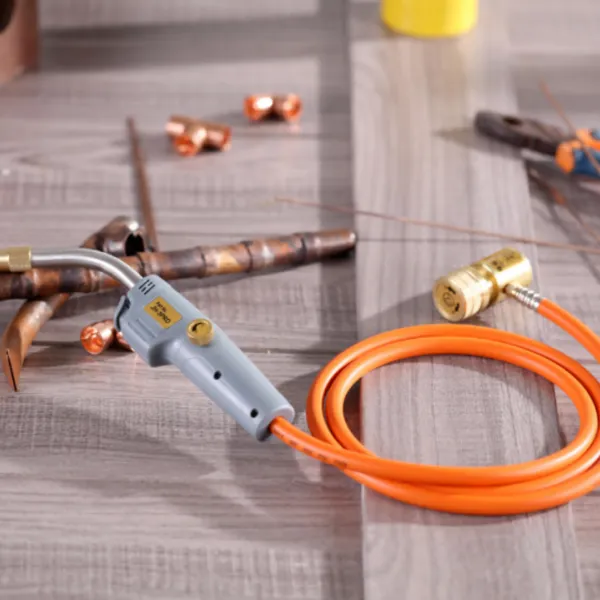 Read More

Contact Us
Recommended Products
-
 WT‑SSA Premium Aluminum Housing Self‑Igniting MAPP Torch, 360° Swivel Stainless Tip TorchNegotiableMOQ: 100 Pieces
 -
WT‑SST Self‑Igniting Brass Tip MAPP Torch, 360° Swivel Fast‑Cooling Premium Brazing TorchNegotiableMOQ: 100 Pieces
-
WT‑SS Self‑Igniting MAPP Gas Torch, 360° Swivel Stainless Steel Tip High‑Heat Brazing BlowtorchNegotiableMOQ: 100 Pieces
-
WT‑S 360° Swivel Single‑Tip MAPP/Propane Gas Torch, Stainless Steel Tip Manual Ignition Brazing TorchNegotiableMOQ: 100 Pieces
-
WT‑5STA Premium Aluminum‑Handle Pistol‑Grip MAPP Torch Heavy‑Duty Brass‑Tip Welding TorchNegotiableMOQ: 100 Pieces
-
WT‑5ST Pistol‑Grip MAPP Gas Torch With Fast‑Cooling Brass Tip Safety‑Lock TorchNegotiableMOQ: 100 Pieces
-
WT‑5S Ergonomic Pistol‑Grip MAPP Gas Torch Instant‑Ignition Safety‑Lock Brazing TorchNegotiableMOQ: 100 Pieces
-
WH‑DSVP Patented Switchable Dual‑Tip MAPP Hose Torch One‑Hand Needle‑Valve TorchNegotiableMOQ: 100 Pieces
-
WH‑SSVNP Patented Flexible Stainless Tube MAPP Hose Torch All‑Directional Gooseneck TorchNegotiableMOQ: 100 Pieces
-
WH‑DSVAP Patented Switchable Dual‑Tip MAPP Hose Torch Needle‑Valve & Aluminum‑Body TorchNegotiableMOQ: 100 Pieces
-
WH‑DSVA Dual‑Tip MAPP Hose Torch With Needle Valve Self‑Igniting Aluminum Igniter TorchNegotiableMOQ: 100 Pieces
-
WH‑SSVTP Patented One‑Piece MAPP Hose Torch One‑Hand Needle‑Valve & Thick Brass TipNegotiableMOQ: 100 Pieces
-
WH‑SSVT Deluxe MAPP Hose Torch With Needle‑Valve & Thick Brass Tip 6‑Blade Thruster TorchNegotiableMOQ: 100 Pieces
-
WH‑SSV MAPP Hose Torch With Needle‑Valve Flame Adjustment Self‑Igniting Extension TorchNegotiableMOQ: 100 Pieces
-
WH‑SST Self‑Igniting Brass Tip MAPP Hose Torch Fast‑Cooling Extension Brazing TorchNegotiableMOQ: 100 Pieces
-
WH‑SS Self‑Igniting MAPP Gas Hose Torch Flexible High‑Pressure Extension Soldering TorchNegotiableMOQ: 100 Pieces
-
WT‑TSA Self‑Igniting Triple‑Tip MAPP Gas Torch Aluminum Housing High‑Heat Brazing TorchNegotiableMOQ: 100 Pieces
-
WT‑T Triple‑Tip Ultra High‑Output MAPP Gas Torch 360° Swivel Three‑Flame Brazing TorchNegotiableMOQ: 100 Pieces
-
WT‑D1SA Premium Self‑Igniting Dual‑Tip MAPP Torch Aluminum Igniter Twin Flame TorchNegotiableMOQ: 100 Pieces
-
WT‑D1A Self‑Igniting Dual‑Tip MAPP Gas Torch 360° Swivel Twin Burner Pipe Welding TorchNegotiableMOQ: 100 Pieces