
 Business License
Blog Categories

Factory Testing Before Shipping Torches and Power Tools
A buyer once received a batch of 600 torches in which 14 units would not hold pressure at the valve stem, a fault that appeared within seconds on a test bench but had not been looked for before packing. Sorting the batch at the destination cost more than the units were worth.
That kind of loss is what a structured factory acceptance test tools programme exists to prevent. Testing before shipment moves the cost of finding a fault from the destination warehouse to the line where the fault was made.
This article sets out what pre shipment torch testing covers, which fields belong in a power tool inspection report, and how sampling and records fit together. It closes with two findings from a production line and the questions buyers ask most often.
1. What a Factory Acceptance Test Tools Programme Covers
A factory acceptance test tools programme is the set of instruments, limits and records used to decide whether a batch may be packed. It is a system rather than a single test, and it usually has four layers.
The first layer checks incoming parts against drawing before they enter the line. The second checks the assembled unit against its functional specification. The third checks a sample against the full requirement, and the fourth confirms packaging will survive transport.
Each layer produces a record. Where a record is missing, a later dispute about a fault becomes a conversation about opinions rather than about measurements. The programme is written before the first order rather than assembled after the first complaint, because a test added in response to a fault covers the fault that has already happened.
Yichun Wentu Imp&Exp Trade Department applies this structure across both product families it exports, so that a torch order and a power tool order follow the same release logic even though the tests differ.
2. Pre Shipment Torch Testing on the Assembly Line
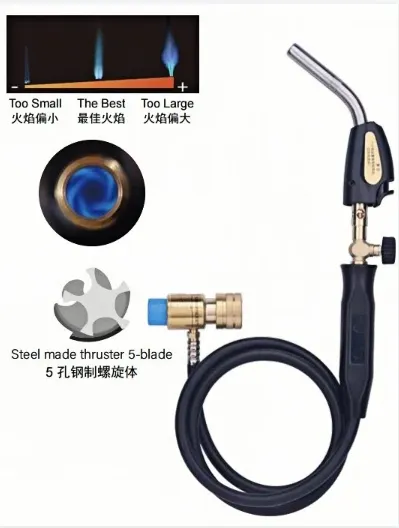
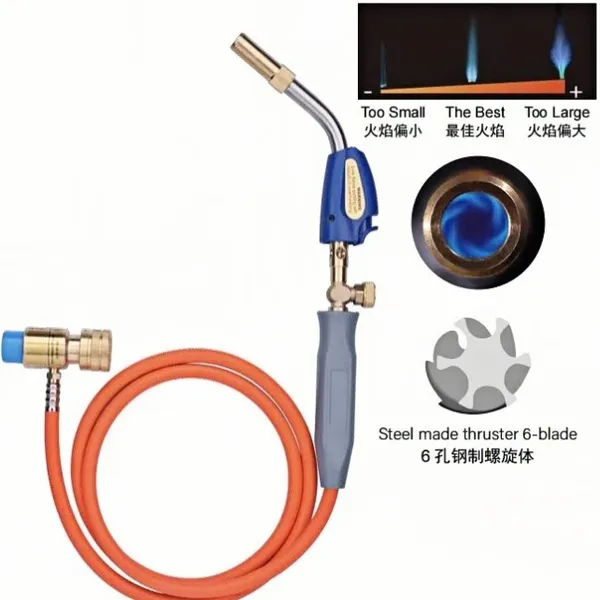
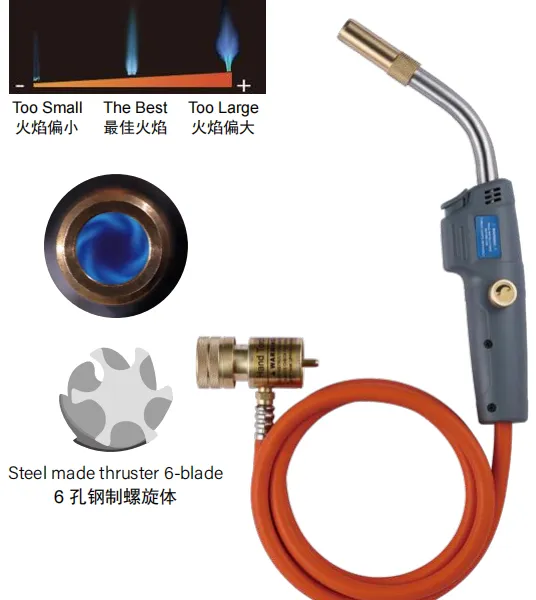
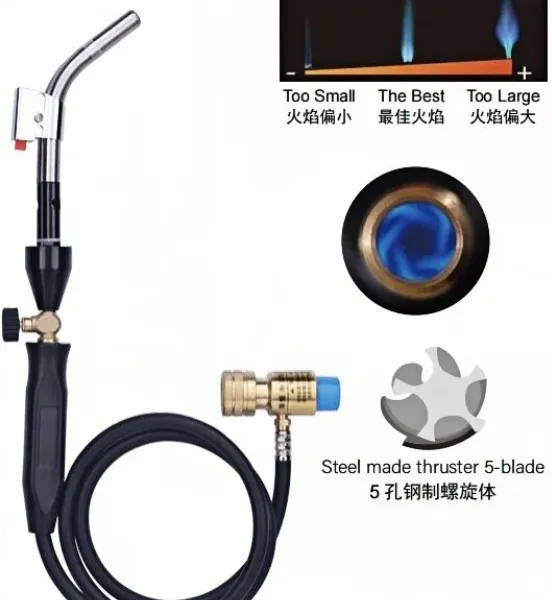
Pre shipment torch testing for gas torches concentrates on four things: gas containment, ignition, flame stability and mechanical fit. A torch that fails any of them is a safety item rather than a quality item.
Containment is tested with pressure. The assembled torch is pressurised to roughly 0.6 MPa and held for about 30 seconds with the valve closed, then checked at the stem, the tip joint and the cylinder connection with a leak-detection solution.
| Test | Method | Typical acceptance limit |
|---|---|---|
| Pressure hold | 0.6 MPa for 30 seconds, solution at joints | No bubble formation |
| Ignition | Piezo or match light, 10 consecutive attempts | 10 successful lights |
| Flame stability | Hold at working setting for 60 seconds | No lift-off, no flashback |
| Valve response | Open and close 20 cycles | Smooth travel, no sticking |
| Tip seating | Thread engagement check with torque gauge | No cross-threading at 2.5 Nm |
Flame stability is the test most often reduced under production pressure, and it is the one that predicts field complaints. A tip that lifts off the burner at low flow will be reported by users as a torch that will not stay lit.
Valve response deserves the same attention. A valve that sticks after 20 cycles will annoy a user long before it fails, and the fault is easier to catch on a bench than in a customer complaint. Wentu cycles the valve on every unit before packing for this reason, since a stiff valve reads as a quality fault to the user even when the torch lights normally.
3. Power Tool Inspection Report Fields and Records
A power tool inspection report is as useful as the fields it captures, and the fields should match the failure modes the product actually has. For cordless tools those modes cluster around electrical safety, mechanical alignment and battery function.
Electrical safety comes first. An insulation resistance check and a no-load current reading on every unit catch assembly errors that would otherwise reach the destination as a dead tool or a tripped supply.
Mechanical alignment follows. Chuck or collet runout, spindle end float and the seating of the gear housing are all measurable, and all of them show up in use as vibration or as shortened bit life.
Wintooltech records each of these values per unit rather than per batch, because a batch average hides the one unit that will come back. Where a reading falls outside the limit, the unit is held for rework and the record notes the disposition.
4. Sample Size and Batch Rules in Pre Shipment Torch Testing
Sampling is the part of pre shipment torch testing that most often gets argued about, because testing every unit costs money and testing too few costs credibility.
A workable approach uses a general inspection level with an acceptance quality limit of 1.5 percent for major defects and 4 percent for minor ones. Under that plan, a batch of 500 units draws a sample in the region of 50 pieces, and the batch is accepted if the number of defects in the sample stays at or below the limit.
Critical defects are treated differently. A leak or an electrical safety failure is a critical defect, and a plan that samples for critical defects accepts far less risk, often requiring zero occurrences in the sample.
The practical rule is to sample for the defects that are tolerable and to test every unit for the ones that are not. Pressure integrity and insulation resistance sit in the second group, and both are fast enough to run on the whole line.
5. Functional Tests Behind a Power Tool Inspection Report
A power tool inspection report is not complete without a functional run, because some faults appear under load alone. A no-load current reading will not reveal a gear train that binds when a bit engages material.
A typical functional sequence runs the tool unloaded for 30 seconds, records speed and current, applies a controlled load for 60 seconds, and checks that the housing temperature stays within limits. Speed drop under load is then compared against the specification for that model.
Battery behaviour is tested on the same pass. A pack is charged and discharged through one cycle, and its capacity is recorded against the nominal figure to catch cells that were mismatched at assembly.
The value of this stage is that it produces numbers rather than a pass or fail. When a user reports that a tool feels weak, the recorded speed and current allow the supplier to compare the returned unit against the figure recorded when it shipped. Wentu keeps these readings against the serial number for that reason, so a returned tool can be checked against the values recorded on the day it left the line.
6. Packing and Drop Checks After a Factory Acceptance Test Tools Run
Packing checks close a factory acceptance test tools run, and they are frequently skipped because a unit that passes electrical and functional tests is assumed to survive a carton.
The relevant test is a drop sequence. A packed carton is dropped from roughly 760 mm onto each of six faces, then opened and the unit re-tested. Damage found at this stage costs a carton, while the same damage found at the destination costs a shipment.
Internal protection matters as much as carton strength. A torch head that can shift inside its box will take the impact directly on the tip, so a moulded insert or a shaped divider is part of the specification rather than a packing convenience.
For sea freight, humidity joins the list. Cartons for long sea routes carry moisture barrier material, because condensation in a container can corrode plated parts faster than any handling accident.
Carton marking belongs to the same review. A carton that states the model, the quantity and the handling symbol in a legible size reduces the chance of a mis-shipment, and it lets a receiving team identify a damaged unit without opening every box on a pallet.
7. Traceability and Records Behind a Power Tool Inspection Report
Traceability is what turns a power tool inspection report into a tool for solving problems rather than a document for filing. A report tied to a batch number allows the supplier to find every unit made from the same material lot.
The record chain runs from incoming material through assembly to the shipping carton. Lot numbers on the motor, the switch and the housing are logged against the unit serial, which means a fault traced to one supplier lot can be scoped in hours.
Records are held for the period the buyer's market requires, commonly 3 to 5 years for tools and torches sold into regulated consumer markets. The storage format matters less than the ability to retrieve a specific unit's readings on request.
Wentu includes a batch record summary with every shipment, so a buyer receives the test values alongside the goods rather than having to request them after a problem appears.
8. Two Factory Acceptance Test Tools Findings From the Line
Two findings from a production line show what the testing layers actually catch. The first concerned a run of 1,200 dual tip torches built with a new delivery of valve assemblies.
Pressure hold testing found 9 units leaking at the stem in a sample of 125, a rate near 7 percent that exceeded the 1.5 percent limit for major defects. The batch was quarantined, the valve lot was traced to a single supplier delivery, and sealed threads were introduced on the assembly line.
Retesting the corrected batch produced one leak in 200 units, and the affected lot was replaced before any cartons left the building. The cost was two days of production time against a destination sort of 1,200 units.
The second finding came from a cordless driver batch where chuck runout measured 0.18 mm against a 0.10 mm limit on 6 units in 80. The spindle seating was corrected, and the record was updated to add the runout check to the per-unit list.
9. Frequently Asked Questions About Factory Acceptance Test Tools
9.1 What should a factory acceptance test tools procedure include for gas torches?
A factory acceptance test tools procedure for gas torches should include a pressure hold with joint inspection, an ignition trial, a flame stability check at the working setting, a valve cycling test and a tip seating check. Pressure integrity and ignition are tested on every unit, while flame stability and valve cycling are often sampled. The procedure should also record the ambient temperature during testing, since a torch that passes on a cold bench can behave differently in a hot climate at the destination.
9.2 How much of a batch can pre shipment torch testing cover?
Pre shipment torch testing commonly combines full inspection for critical characteristics with sampling for the rest. Critical items such as pressure integrity and insulation resistance are fast enough to test on every unit, and the risk of a field failure makes sampling them uneconomical. Remaining characteristics follow a general inspection level with an acceptance quality limit, which typically draws 50 to 80 pieces from a 500 unit batch. The split should be written into the purchase specification rather than left to the supplier's discretion.
9.3 What belongs in a power tool inspection report?
A power tool inspection report should record insulation resistance, no-load current and speed, speed under a controlled load, housing temperature after a run, chuck or collet runout, spindle end float and battery capacity through one charge and discharge cycle. Each value needs a stated limit and the unit serial it applies to. Batch averages are useful for trends but not for release, because the single unit outside the limit is the one that generates a claim after shipment. A report that lists a reading without the limit it is compared against cannot be used to release a batch, since the receiving team has no way to judge whether the number is acceptable.
9.4 How long should test records be kept?
Test records are commonly held for 3 to 5 years, depending on the market the goods are sold into and the storage the buyer expects. The requirement is retrievability rather than format, so a supplier should be able to pull the readings for one serial number on request. Keeping records by batch as well as by serial shortens the work when a fault is traced to a material lot, because the affected units can be identified without inspecting the whole shipment. Storing the readings in a searchable form matters more than the medium used, since the request usually arrives as a single serial number and a date.
Recently Posted
-
Hardware Tools in Plant Maintenance and Repair Work
October 20, 2026A shift lost four hours of production to one missing bearing puller. The plant had a full tool box and three hundred sockets, and Read More
-
Payment and Incoterms for Tool and Drone Power Orders
October 20, 2026A first order of cordless tools and a tethered power station is usually settled on three pages, one for the goods, one for the pr Read More
-
Writing an RFQ for Hardware Tools and Gas Torches
October 19, 2026An importer sent the same enquiry to three suppliers and received three quotes that could not be compared. One priced a torch hea Read More
-
What Is Hardware in the Tool Trade? A Practical Definition
October 19, 2026A purchasing manager once asked a supplier for all the hardware on a tool order and received three cartons of screws with no dril Read More

Contact Us
Recommended Products
-
 MAPP Hose Torch for HVAC Brazing Soldering, WH‑DSVAP Patented Switchable Dual‑Tip Needle‑Valve, Aluminum‑Body Propane Gas TorchNegotiableMOQ: 100 Pieces
-
WT‑ST Heavy‑Duty Brass Valve MAPP/Propane Torch Adjustable Flame Gas Soldering TorchNegotiableMOQ: 100 Pieces
-
MAPP Gas Torch for Heat‑Concentrating Brazing Work, WT‑SSP Patented Model, Self‑Igniting, Stainless Steel Tip TorchNegotiableMOQ: 100 Pieces
-
MAPP Torch for Heavy‑Duty Brazing Soldering, WT‑SSA‑1 Model, Self‑Igniting, Aluminum Housing 360° Swivel TorchNegotiableMOQ: 100 Pieces
-
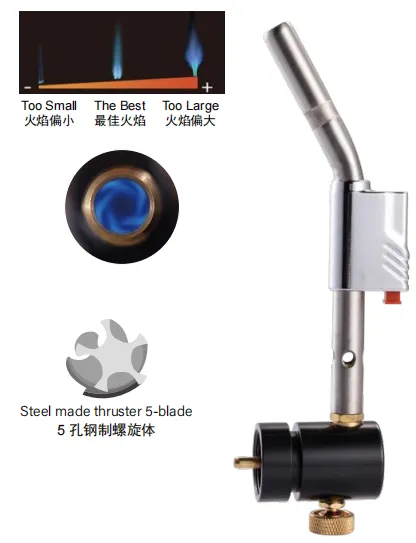
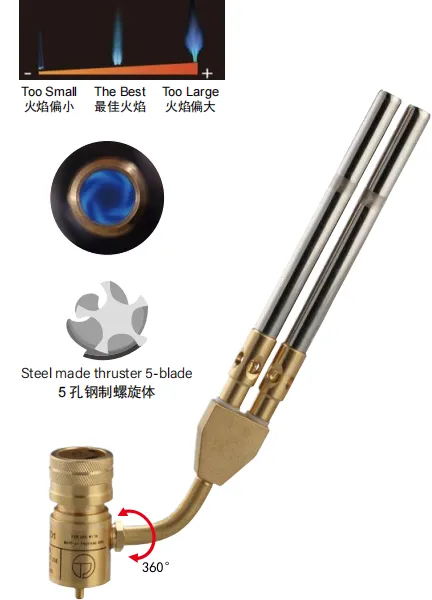
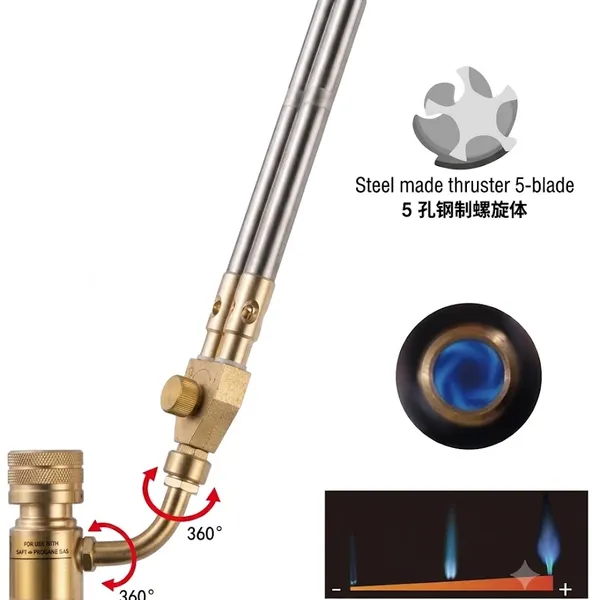
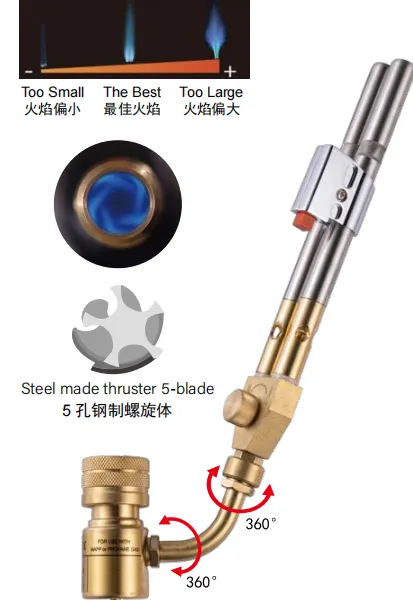
WT‑D1 Dual‑Tip High‑Heat MAPP Gas Torch 360° Swivel Twin Flame Copper Pipe Brazing TorchNegotiableMOQ: 100 Pieces
-
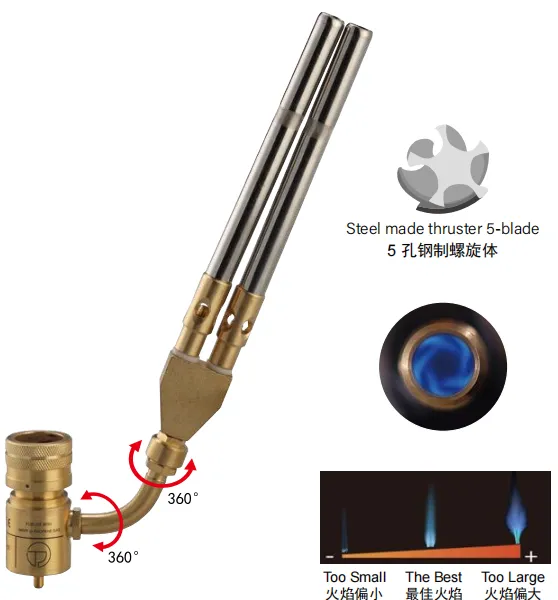
MAPP Gas Torch for High‑Efficiency Brazing Processing, WT‑D2 Model, 360° Two‑Way Swivel Dual‑Tip, Twin Flame TorchNegotiableMOQ: 100 Pieces
-
MAPP Torch for Twin‑Flame Brazing Work, WT‑D2SA Model, Self‑Igniting Dual‑Tip 360° Two‑Way Swivel, Aluminum Igniter TorchNegotiableMOQ: 100 Pieces
-
WT‑D2P Patented Switchable Single/Dual Tip MAPP Torch 360° Two‑Way Swivel Brazing TorchNegotiableMOQ: 100 Pieces
-
MAPP Torch for Brazing Soldering, WT‑D2AP Patented Model, Switchable Dual‑Tip Self‑Igniting, Aluminum Housing TorchNegotiableMOQ: 100 Pieces
-
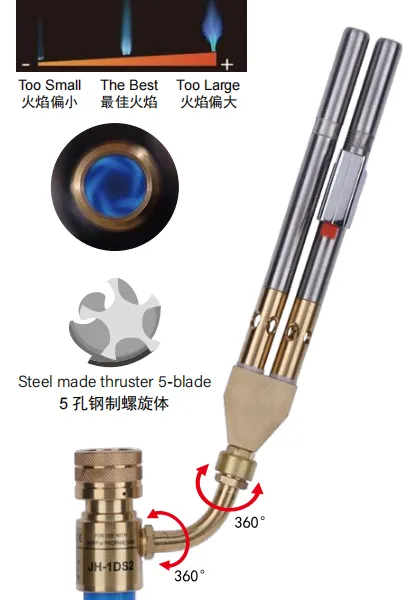
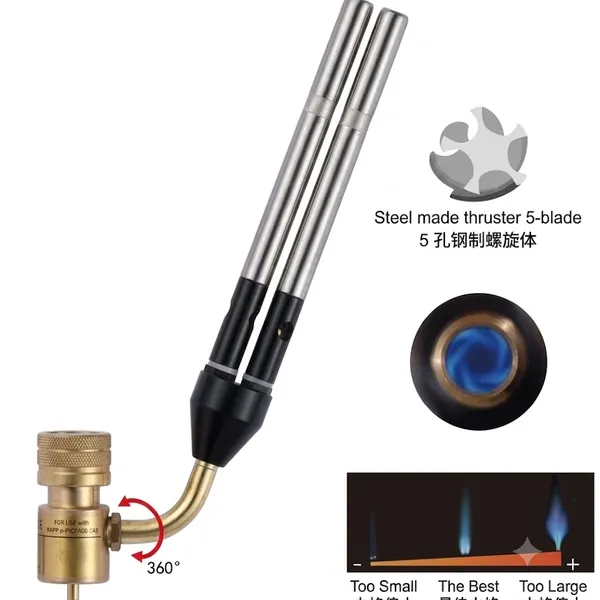
MAPP Gas Torch for Welding Brazing Work, WT‑D1A Model, 360° Swivel Self‑Igniting Dual‑Tip, Twin Burner Pipe TorchNegotiableMOQ: 100 Pieces
-
WT‑D1SA Premium Self‑Igniting Dual‑Tip MAPP Torch Aluminum Igniter Twin Flame TorchNegotiableMOQ: 100 Pieces
-
MAPP Gas Torch for Three‑Flame Brazing Processing, WT‑T Model, 360° Swivel Triple‑Tip, Ultra High‑Output TorchNegotiableMOQ: 100 Pieces
-
WT‑TSA Self‑Igniting Triple‑Tip MAPP Gas Torch Aluminum Housing High‑Heat Brazing TorchNegotiableMOQ: 100 Pieces
-
MAPP Gas Hose Torch for Flexible Soldering Brazing, WH‑SS Model, Self‑Igniting, Flexible High‑Pressure Extension TorchNegotiableMOQ: 100 Pieces
-
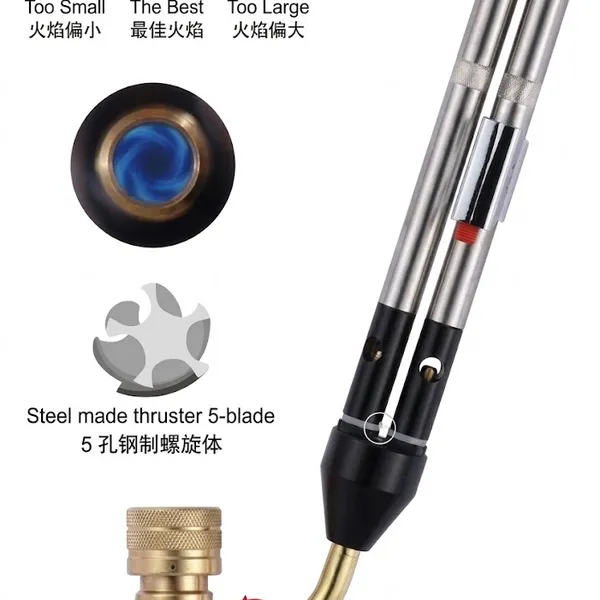
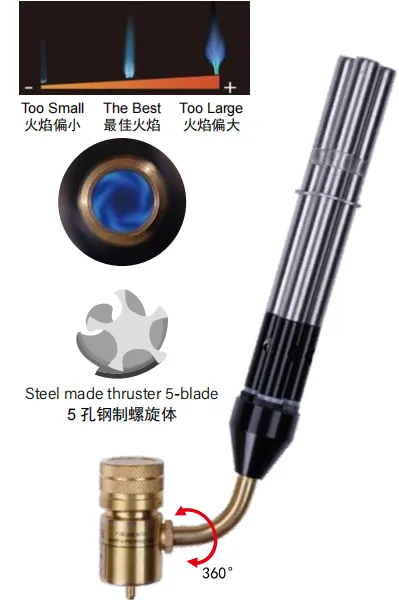
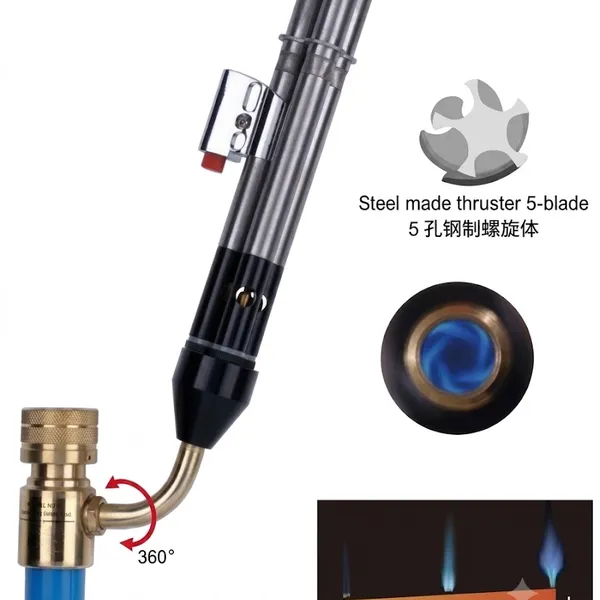
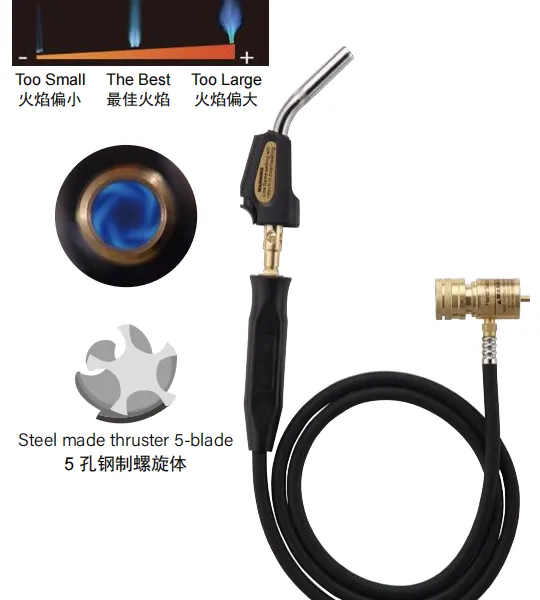
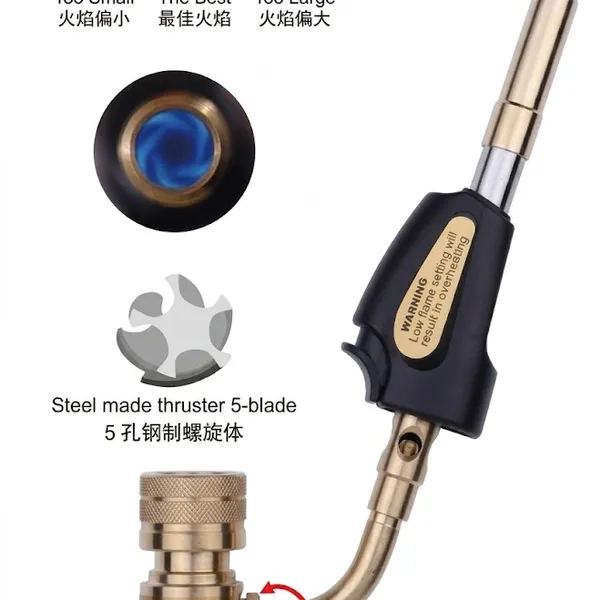
MAPP Hose Torch for Extension Brazing Soldering, WH‑SST Model, Self‑Igniting, Fast‑Cooling Brass Tip TorchNegotiableMOQ: 100 Pieces
-
MAPP Extension Torch for Brazing Work, WH‑SSV Model, Needle‑Valve Flame Adjustment Self‑Igniting, High‑performance Extension TorchNegotiableMOQ: 100 Pieces
-
WH‑SSVT Deluxe MAPP Hose Torch With Needle‑Valve & Thick Brass Tip 6‑Blade Thruster TorchNegotiableMOQ: 100 Pieces
-
MAPP Hose Torch for Heavy‑Duty Brazing Work, WH‑SSVTP Patented One‑Piece Model, One‑Hand Needle‑Valve, Thick Brass Tip TorchNegotiableMOQ: 100 Pieces
-
WH‑DSVA Dual‑Tip MAPP Hose Torch With Needle Valve Self‑Igniting Aluminum Igniter TorchNegotiableMOQ: 100 Pieces
-
MAPP Hose Torch for Brazing Application, WH‑DSVAP Patented Model, Needle‑Valve Switchable Dual‑Tip, Aluminum‑Body TorchNegotiableMOQ: 100 Pieces