
 Business License
Blog Categories

Case: Keeping a Drone Aloft Through a Full Night Shift
A site-services contractor had to keep a materials yard lit from dusk until a 06:00 handover, seven nights in a row. Battery packs alone could not cover a window that long.
What follows is a drone continuous flight case taken from that job. It sets out the tethered operation case study night by night, and closes with the night drone mission power notes the site kept for the next contract.
1. A Drone Continuous Flight Case: The Night Lighting Brief
The brief was easy to state and harder to meet. A yard of about 4 acres had to stay lit from about 19:30 until 06:00 without leaving the airframe on the ground.
A drone continuous flight case becomes worth planning when the working window is long. Most multirotors in this class carry enough pack for 30 to 45 minutes of hovering with a light payload fitted.
That arithmetic shapes the whole job. A 10-hour window at 35 minutes a flight would mean about 17 landings, 17 battery changes and 17 takeoff checks, every night of the week.
Ground lighting was the alternative. The site had tried four towed light towers, which covered the near half of the yard and left a dark band along the far fence line.
An aircraft hovering at 30 m covers a wider circle from one position, with no mast to move and no fuel to top up in the middle of the shift.
The contractor therefore asked for an aircraft that could stay up across the whole window, with the light pool aimed wherever the crews were working at the time.
2. The Limit a Night Drone Mission Power Plan Has to Beat
A night drone mission power plan starts from one number: the energy the aircraft draws per hour of hover, measured with the actual payload on board.
For the platform used here that figure was about 1,150 W in still air with an 800 g light. Wind and low temperature both push it higher.
Cold matters more at night than buyers expect. A pack that gives 35 minutes at 20 °C can give closer to 25 minutes at 0 °C, which shortens every flight in the plan.
A tether takes the pack out of the loop. Power arrives from the ground module along the cable, so endurance stops being a battery figure and becomes a supply figure.
The plan then has to beat a different limit. Since the aircraft can stay up, the constraint moves to the module, the cable and the AC supply that feeds them both.
Wentu rates each module by continuous output rather than peak, and that continuous figure is the one a night plan should be built on.
The contractor wrote the target as 11 hours of airborne time per night, with a 20 minute service break every 4 hours.
3. Tethered Operation Case Study: Setting Up the Ground Module
The tethered operation case study proper begins at the ground module, a case about the size of a large tool box with the winch built in.
The module took 230 V single phase AC from a 6 kW generator parked clear of the working area and of the cable run.
Inside, the supply was rectified and fed to the cable at a controlled voltage, while the winch paid out and recovered line as the aircraft drifted with the wind.
In this case the station was rated at 3 kW continuous, comfortably above the 1,150 W the aircraft drew, which left headroom for gusts and for cold mornings.
The cable ran 110 m, which put the aircraft close to the centre of the yard while the module stayed behind the site hut and out of the traffic route.
Setup took about 40 minutes on the first night, including the anchor check, the winch test and the light balance, and about 25 minutes on the nights that followed.
4. A Drone Continuous Flight Case: Duty Cycle and Airframe Choice
The duty cycle is what separates a drone continuous flight case from a short demonstration flight. Here the aircraft flew in 4 hour blocks split by a 20 minute break.
Each break covered a cable inspection at the winch, a temperature check on the module body, and a wipe of the light lens, which collects yard dust quickly.
Landing was not needed. The aircraft was brought down to about 3 m, held steady while the checks were made, then lifted back to its working height.
The airframe was chosen for payload and hover stability rather than top speed, because a steady hover holds the light pool in one place, which the crews asked for on night one.
Three crews rotated through the shift, and every operator was walked through the emergency descent procedure before taking over the watch.
Two people covered the night between them, one at the module and one watching the aircraft and the ground area below it.
Yichun Wentu keeps a setup card with each station, and the contractor worked from that card rather than from memory after the first night.
5. Night Drone Mission Power: Cable, Wind and Cold
Night drone mission power faults rarely start at the module. They start at the cable, which is the one part of the system that moves all night long.
The cable was routed away from vehicle paths and marked with two cones at the crossing point, so a reversing truck could not run over the line in the dark.
Wind is the second variable. The site called a halt at gusts above about 10 m per second, since the aircraft cannot hold a steady light pool beyond that.
Cold was managed by keeping the module under a cover between flights and letting it warm for 10 minutes before the first lift of the night.
Condensation was the surprise of the week. On the third night the lens fogged on the inside, which cost about 15 minutes and one spare light.
A spare light, a spare set of cable connectors and a spare module fan were kept in the site hut, which turned each fault into a short stop rather than a lost night.
6. Tethered Operation Case Study: Five Nights of Measured Results
Across five nights the aircraft logged 52 hours of airborne time against a plan of 55, with the whole shortfall falling on the night the lens fogged.
The tethered operation case study shows the largest saving in battery handling, which fell from a projected 17 pack changes a night to none at all.
Fuel use fell as well. One 6 kW generator ran the module at part load for the shift, against the diesel the four light towers had burned on earlier jobs.
Light coverage improved. The aircraft at 30 m lit about three times the ground area of the towers it replaced, from a single position.
The crews reported better visibility of the near ground, which is exactly where the towers had thrown hard shadows across the work face.
Cost per night was recorded by the contractor and came in below the tower arrangement, mostly through fuel, labour and setup time saved.
The contractor sent the five nights of figures back to Wintooltech, which now quotes the same module for similar yard work.
The contractor also logged the weather each night, because gust speed and air temperature explained most of the variation in the load the module carried. That log now forms part of the setup card for the next yard job.
7. A Drone Continuous Flight Case: What Went Wrong and What Changed
No job of this length runs clean, and this drone continuous flight case had three faults worth recording for the next one.
The first was a voltage dip when a second power tool was plugged into the same generator. The module dropped output for about a second and the aircraft sank 2 m.
The fix was to dedicate the generator to the module and run site tools from a separate supply, which removed the shared load at a stroke.
The second was a warm connector at the module outlet after four hours of continuous draw. It proved to be a loose pin rather than a design fault.
The third was the fogged lens already noted. A sealed spare light kept in a dry box solved that for the rest of the week.
Wentu supplied a corrected setup card after the three faults, so the next contract started from the revised procedure rather than the original one.
8. Night Drone Mission Power: Notes for Buyers Planning Night Work
Anyone building a night drone mission power plan can take five practical points away from this case.
Size the ground module above the aircraft's measured draw by a clear margin, because cold air and gusts both raise the figure once the sun goes down.
Give the generator a circuit of its own. A module sharing a supply with site tools will see every load step those tools make.
Plan the service break into the schedule rather than treating it as lost time. Twenty minutes every 4 hours is cheap against a failure at 03:00.
Spare parts decide how a night ends. A light, a connector set and a fan kept on site turned three faults into three short stops.
Write the limits down and hand them to the crews. The wind limit and the descent procedure were the two items every operator asked about.
Yichun Wentu Imp&Exp Trade Department lists module ratings and cable lengths against each supported aircraft, so a buyer can check the pair before the first night.
9. Frequently Asked Questions on Night Drone Mission Power
9.1 What does a drone continuous flight case look like in practice?
A drone continuous flight case is a job long enough that battery endurance cannot cover it, so power has to come from the ground. In the case described here, a materials yard had to stay lit for about 10 hours a night. A battery platform would have needed roughly 17 landings and pack changes per shift, against no landings at all on a tether. The aircraft flew in 4 hour blocks with a 20 minute service break, and the module drew its supply from a generator on a dedicated circuit.
9.2 What did the tethered operation case study measure?
The tethered operation case study measured airborne hours, battery handling, fuel use and light coverage across five nights. The aircraft logged 52 hours of airborne time against a plan of 55, with the shortfall on one night when a lens fogged and a spare had to be fitted. Battery changes fell from a projected 17 a night to none, and one 6 kW generator ran the module at part load in place of the diesel the light towers had burned. A single aircraft at 30 m lit about three times the ground area of the four towers it replaced.
9.3 What sets the limit in a night drone mission power plan?
A night drone mission power plan is limited by the aircraft's draw per hour rather than by a pack, once a tether is in use. The platform here drew about 1,150 W in still air with an 800 g light, and cold raised that figure, since a pack giving 35 minutes at 20 °C gives closer to 25 minutes at 0 °C. That is why the module was sized at 3 kW continuous, which left headroom for gusts and for cold early mornings. The remaining limits are the cable, the AC supply and the wind, which called a halt above about 10 m per second.
9.4 How should a buyer prepare for this kind of night work?
A buyer preparing for night work should size the ground module above the aircraft's measured draw by a clear margin, and give the generator a circuit of its own. In this case a shared supply caused a voltage dip when a second tool was plugged in, and the aircraft sank about 2 m before the module recovered. Planning the service break into the schedule matters too, since 20 minutes every 4 hours is cheap against a failure in the small hours. Spares decide how a night ends, and a light, a connector set and a fan on site turned three faults into three short stops.
Recently Posted
-
Gas Torches in Jewelry Making and Precision Metalwork
October 16, 2026A repair bench once lost a ring setting to a flame that was too large rather than too hot. The torch was a workshop unit meant fo Read More
 -
Flame Temperature and Gas Pressure Specifications for Torches
October 16, 2026Two torches with the same headline flame temperature can behave quite differently on the bench, because the second figure on the Read More
 -
Self Igniting vs Manual Ignition Gas Torches
October 16, 2026A technician on a roof replaced a torch mid job and noticed that the two models weighed the same and lit the same flame, yet one Read More
 -
Introduction to Air Fuel Torches: MAPP, Propane and LPG
October 15, 2026A workshop bought a torch for brazing refrigeration lines and found the flame too soft to bring a joint up to temperature. The to Read More

Contact Us
Recommended Products
-
 WT‑SSA Premium Aluminum Housing Self‑Igniting MAPP Torch, 360° Swivel Stainless Tip TorchNegotiableMOQ: 100 Pieces
 -
WT‑SST Self‑Igniting Brass Tip MAPP Torch, 360° Swivel Fast‑Cooling Premium Brazing TorchNegotiableMOQ: 100 Pieces
-
WT‑SS Self‑Igniting MAPP Gas Torch, 360° Swivel Stainless Steel Tip High‑Heat Brazing BlowtorchNegotiableMOQ: 100 Pieces
-
WT‑S 360° Swivel Single‑Tip MAPP/Propane Gas Torch, Stainless Steel Tip Manual Ignition Brazing TorchNegotiableMOQ: 100 Pieces
-
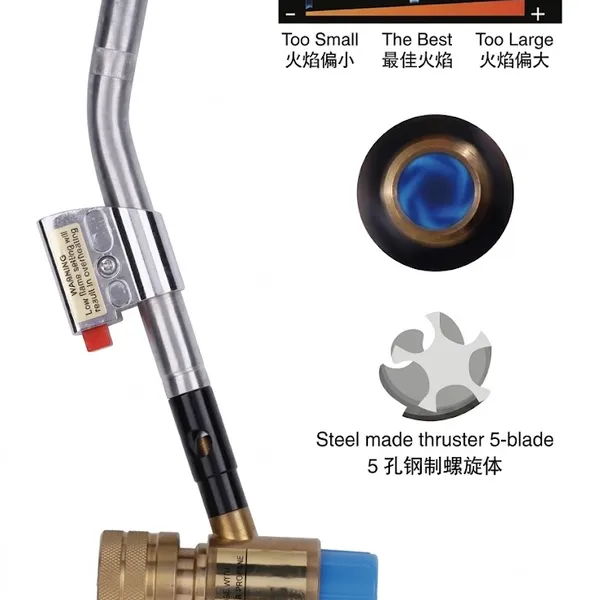
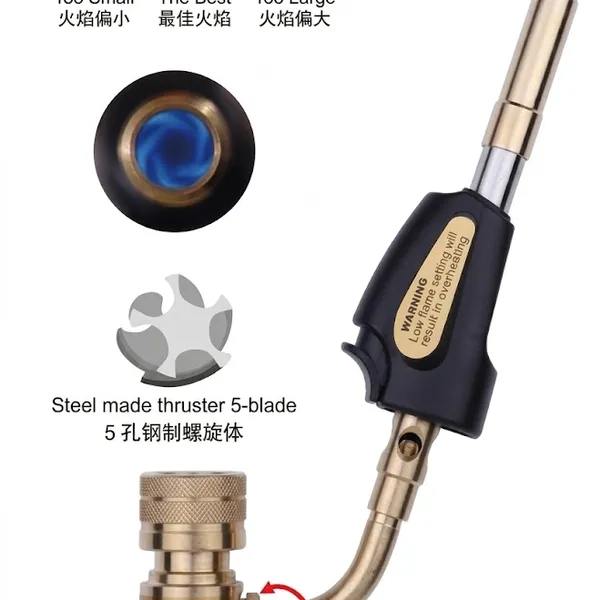
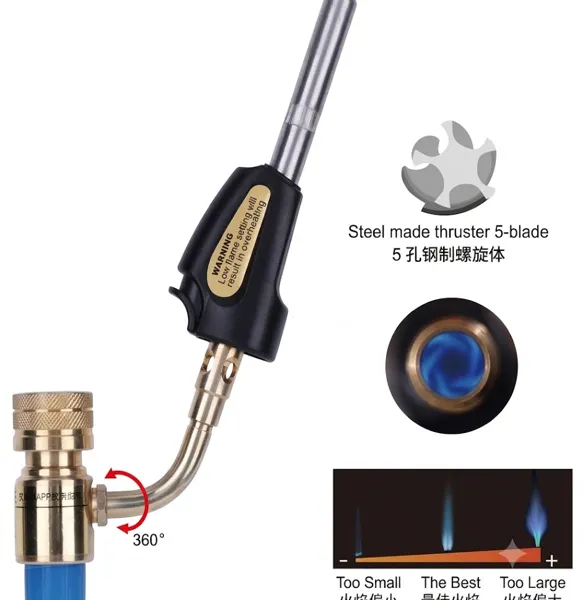
WT‑5STA Premium Aluminum‑Handle Pistol‑Grip MAPP Torch Heavy‑Duty Brass‑Tip Welding TorchNegotiableMOQ: 100 Pieces
-
WT‑5ST Pistol‑Grip MAPP Gas Torch With Fast‑Cooling Brass Tip Safety‑Lock TorchNegotiableMOQ: 100 Pieces
-
WT‑5S Ergonomic Pistol‑Grip MAPP Gas Torch Instant‑Ignition Safety‑Lock Brazing TorchNegotiableMOQ: 100 Pieces
-
WH‑DSVP Patented Switchable Dual‑Tip MAPP Hose Torch One‑Hand Needle‑Valve TorchNegotiableMOQ: 100 Pieces
-
WH‑SSVNP Patented Flexible Stainless Tube MAPP Hose Torch All‑Directional Gooseneck TorchNegotiableMOQ: 100 Pieces
-
WH‑DSVAP Patented Switchable Dual‑Tip MAPP Hose Torch Needle‑Valve & Aluminum‑Body TorchNegotiableMOQ: 100 Pieces
-
WH‑DSVA Dual‑Tip MAPP Hose Torch With Needle Valve Self‑Igniting Aluminum Igniter TorchNegotiableMOQ: 100 Pieces
-
WH‑SSVTP Patented One‑Piece MAPP Hose Torch One‑Hand Needle‑Valve & Thick Brass TipNegotiableMOQ: 100 Pieces
-
WH‑SSVT Deluxe MAPP Hose Torch With Needle‑Valve & Thick Brass Tip 6‑Blade Thruster TorchNegotiableMOQ: 100 Pieces
-
WH‑SSV MAPP Hose Torch With Needle‑Valve Flame Adjustment Self‑Igniting Extension TorchNegotiableMOQ: 100 Pieces
-
WH‑SST Self‑Igniting Brass Tip MAPP Hose Torch Fast‑Cooling Extension Brazing TorchNegotiableMOQ: 100 Pieces
-
WH‑SS Self‑Igniting MAPP Gas Hose Torch Flexible High‑Pressure Extension Soldering TorchNegotiableMOQ: 100 Pieces
-
WT‑TSA Self‑Igniting Triple‑Tip MAPP Gas Torch Aluminum Housing High‑Heat Brazing TorchNegotiableMOQ: 100 Pieces
-
WT‑T Triple‑Tip Ultra High‑Output MAPP Gas Torch 360° Swivel Three‑Flame Brazing TorchNegotiableMOQ: 100 Pieces
-
WT‑D1SA Premium Self‑Igniting Dual‑Tip MAPP Torch Aluminum Igniter Twin Flame TorchNegotiableMOQ: 100 Pieces
-
WT‑D1A Self‑Igniting Dual‑Tip MAPP Gas Torch 360° Swivel Twin Burner Pipe Welding TorchNegotiableMOQ: 100 Pieces